Battles & Events
The real history behind the books, in chronological order from Sarajevo to the fall of Berlin. Each event page lists every book in the database that covers it.
- Events
- 36
- Theaters
- 15
- Span
- 1914–45
- Books
- 214
World War I — The Great War
~17 million dead · the war that broke the old world · 10 eventsAssassination at Sarajevo
Sarajevo, Bosnia 43.9°N 18.4°E
On 28 June 1914 the Bosnian Serb Gavrilo Princip shot Archduke Franz Ferdinand, heir to the Austro-Hungarian throne, and his wife Sophie. Within six weeks the alliance system dragged Europe's great powers into general war — turning a political murder in the Balkans into a catastrophe that would kill some seventeen million people.
First Battle of the Marne
Marne River, France 48.9°N 3.4°E
In early September 1914 French and British armies halted the sweeping German advance on Paris along the Marne, then drove it back to the Aisne. The 'Miracle of the Marne' ended Germany's hope of a swift victory in the west and began the race to the sea that would freeze the Western Front into 400 miles of trenches for the next four years.
 Eastern Front battle
 Battle of Tannenberg
East Prussia 53.5°N 20.1°E
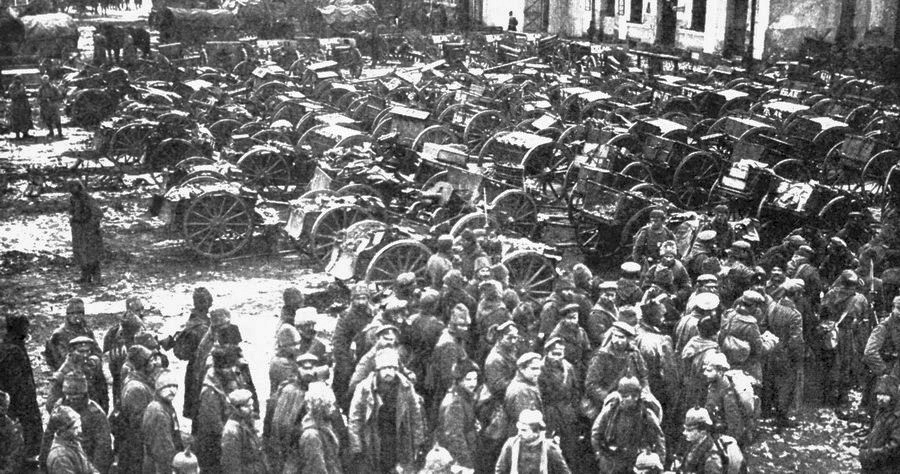
Between 26 and 30 August 1914 the German Eighth Army encircled and destroyed the Russian Second Army in East Prussia, taking some 92,000 prisoners. The victory made national heroes of Hindenburg and Ludendorff and set the pattern of the Eastern Front: a war of movement across vast distances, fought at a scale the West rarely matched.
 Western Front battle
 Battle of Verdun
Verdun, France 49.2°N 5.4°E
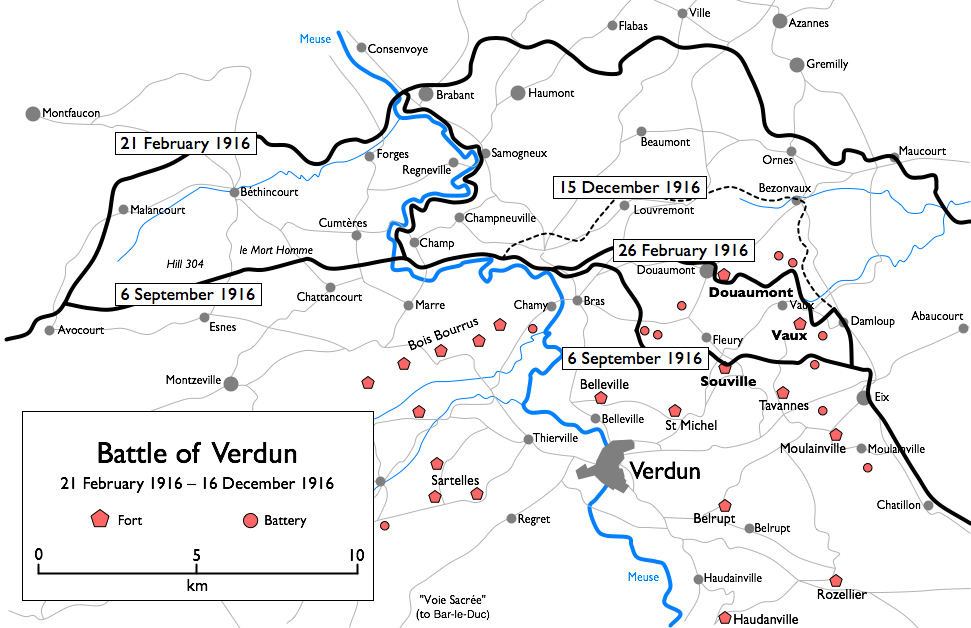
The longest battle of the war ran from February to December 1916, as Germany set out to 'bleed France white' at the fortress city of Verdun. Ten months of artillery and attrition produced over 300,000 dead and the enduring French vow: Ils ne passeront pas — they shall not pass. Neither side gained ground that mattered.
 Western Front battle
 Battle of the Somme
Somme, France 50.0°N 2.7°E
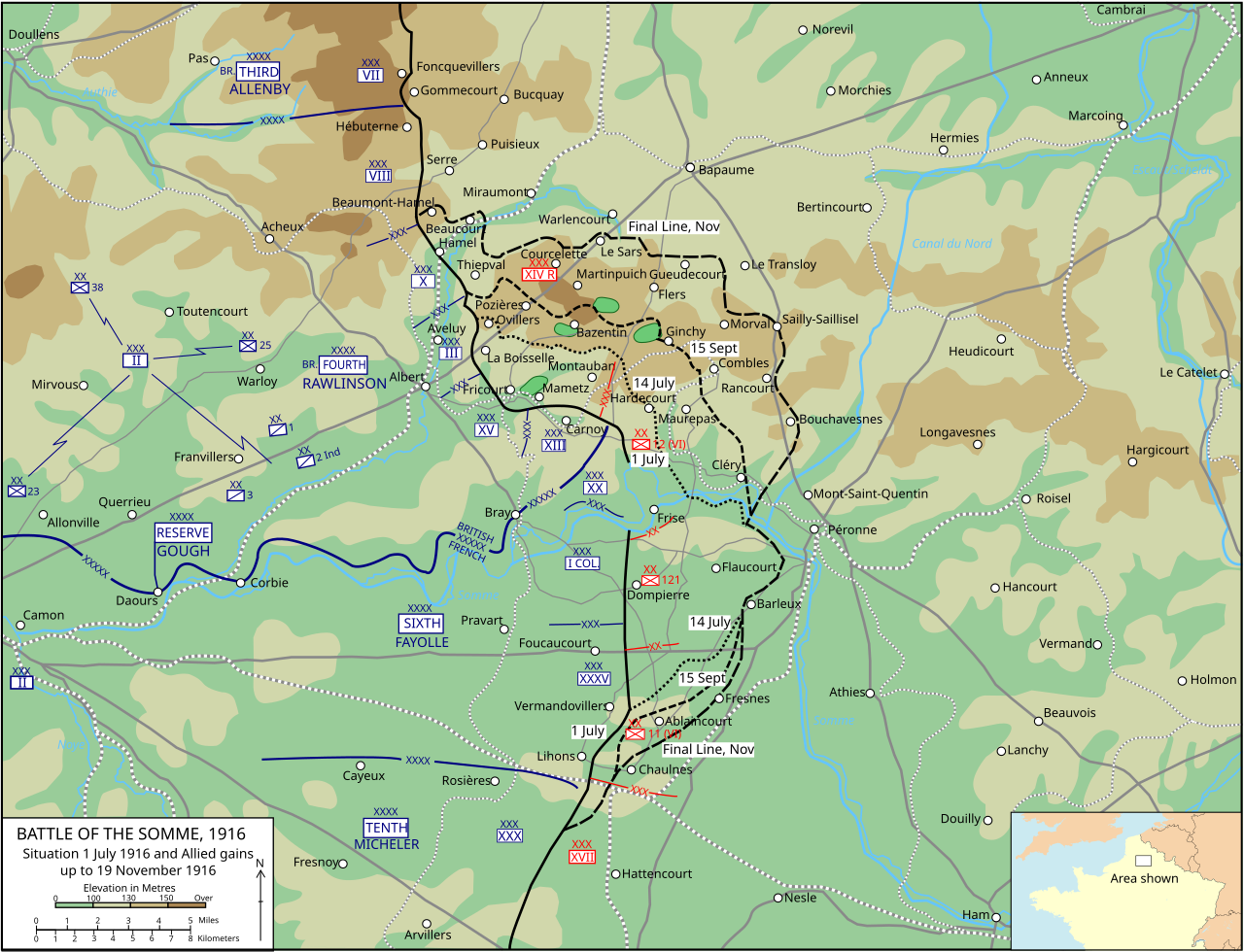
On 1 July 1916 the British Army suffered 57,470 casualties — the bloodiest day in its history — in the opening hours of the Somme offensive. The battle ground on until November for a few miles of mud, costing over a million casualties on all sides and becoming the enduring symbol of the war's industrial slaughter. It also saw the first use of the tank.
 North Sea battle
 Battle of Jutland
North Sea 56.8°N 6.0°E
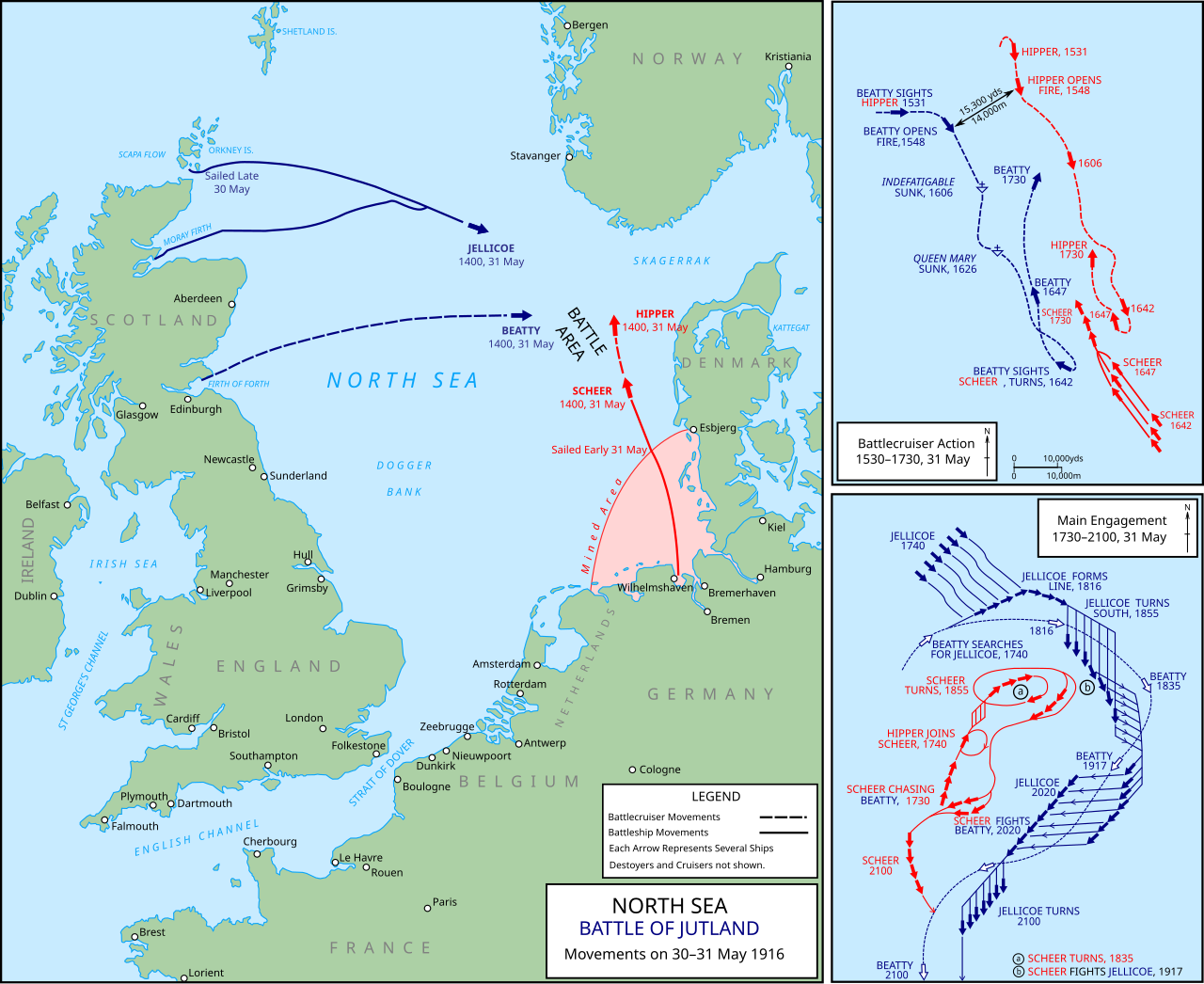
On 31 May–1 June 1916 the British Grand Fleet and the German High Seas Fleet met in the North Sea in the only full-scale clash of battleships of the war — the largest naval battle in history to that point. Germany sank more tonnage and claimed a tactical win, but its fleet never seriously challenged British control of the seas again.
 Western Front campaign
 German Spring Offensive
Northern France 49.9°N 2.9°E
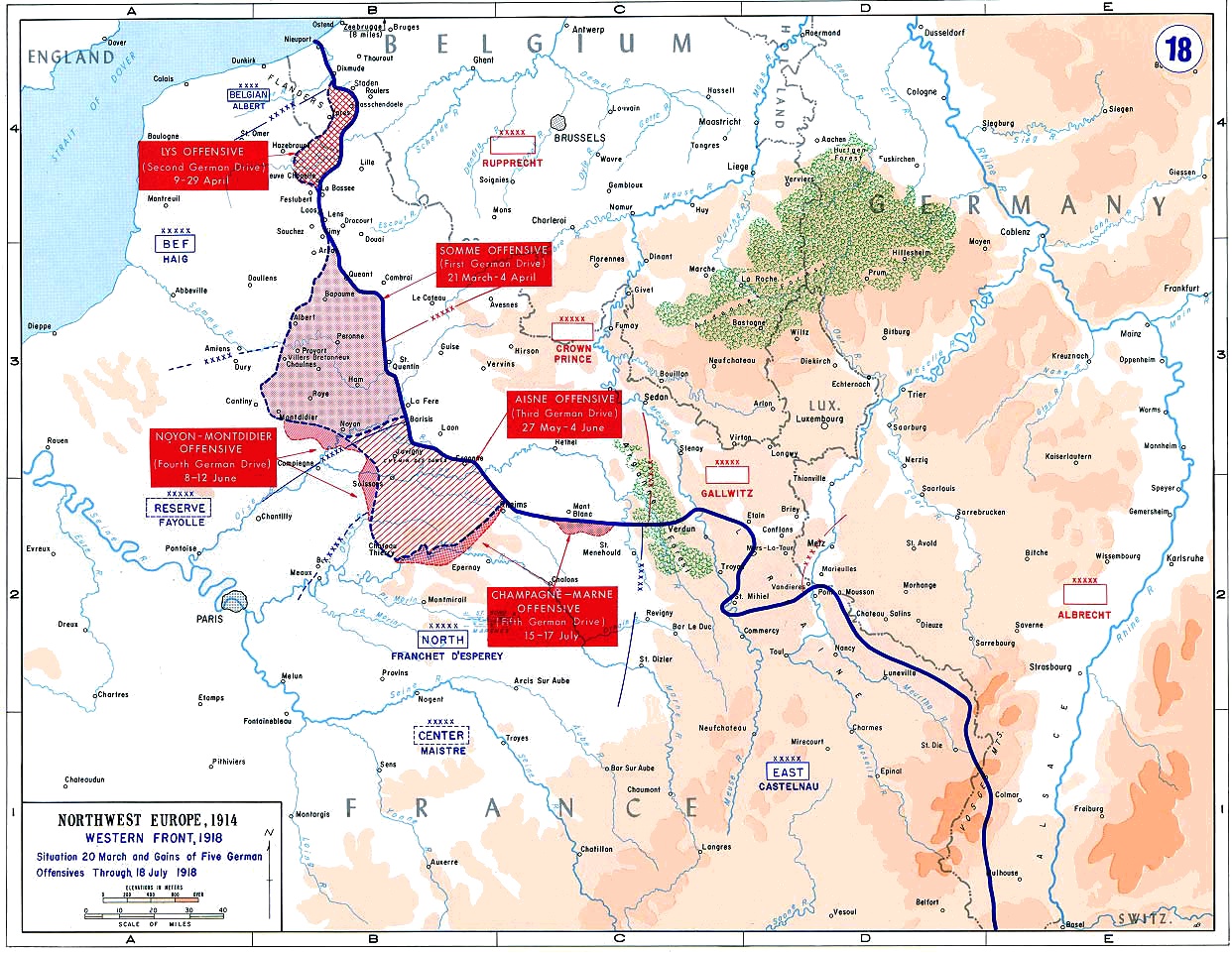
In March 1918, freed from the Eastern Front by Russia's collapse and racing the arrival of the Americans, Germany launched the Kaiserschlacht — five great offensives using new stormtrooper tactics. The Allies were driven back further than at any time since 1914, but the advance outran its supplies and stalled short of Paris, spending Germany's last reserves of men.
Hundred Days Offensive & Armistice
Western Front 49.8°N 3.3°E
From 8 August 1918 — Germany's 'black day' — the Allied armies, stiffened by fresh American divisions and massed tanks, broke the Hindenburg Line and drove the German army into open retreat. With his front collapsing and revolution at home, the Kaiser abdicated and Germany signed the Armistice that silenced the guns at the eleventh hour of 11 November 1918.
World War II — The Second World War
~70–85 million dead · the deadliest conflict in history · 26 events
 Eastern Europe campaign
 Invasion of Poland
Poland 52.2°N 21.0°E
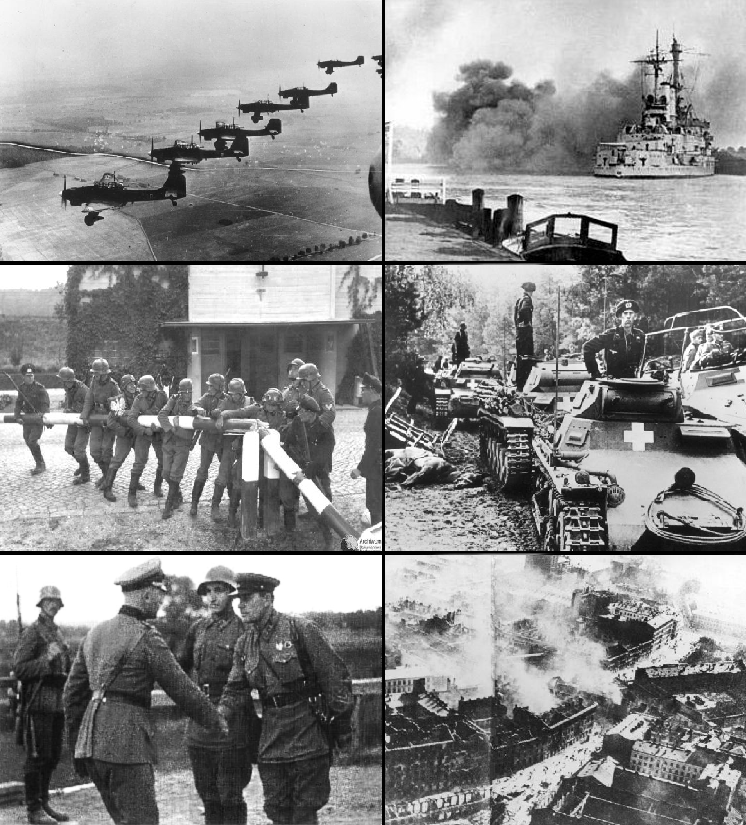
Germany invaded Poland on 1 September 1939 with 1.5 million troops in the first full demonstration of blitzkrieg warfare, and the Soviet Union invaded from the east two weeks later under the secret terms of the Molotov-Ribbentrop Pact. Britain and France declared war on 3 September, but Poland was partitioned within five weeks. The occupation that followed would kill nearly one fifth of the Polish population.
 Atlantic campaign
 Battle of the Atlantic
North Atlantic 50.0°N 30.0°W
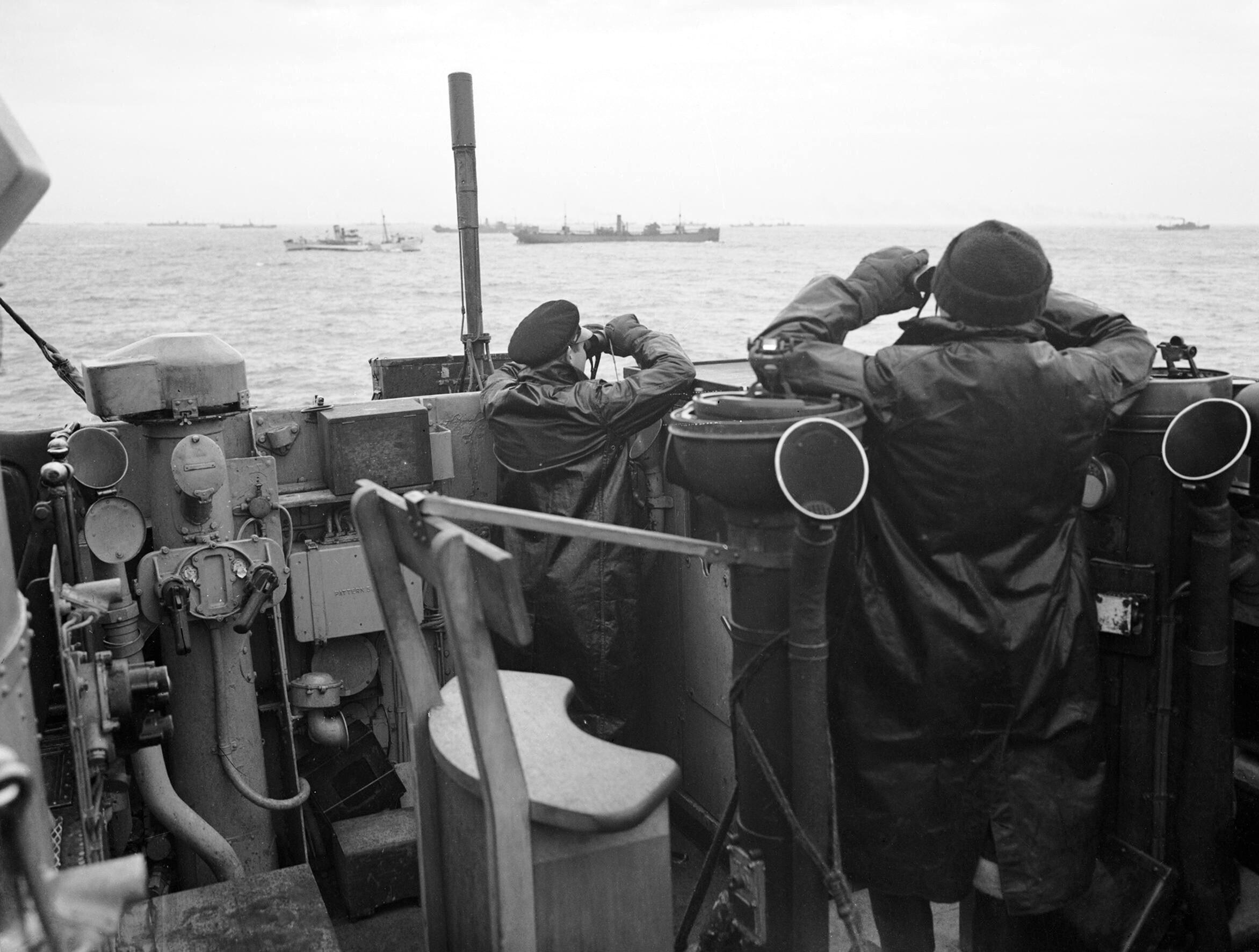
The longest campaign of the war ran from its first day to its last, as German U-boats tried to sever the convoy lifeline between North America and Britain. More than 30,000 Allied merchant seamen died, along with roughly three of every four German submariners who put to sea. Victory in mid-1943 — won by codebreaking, escort carriers, and long-range aircraft — made everything that followed possible.
 Western Europe battle
 Dunkirk Evacuation
Dunkirk, France 51.0°N 2.4°E
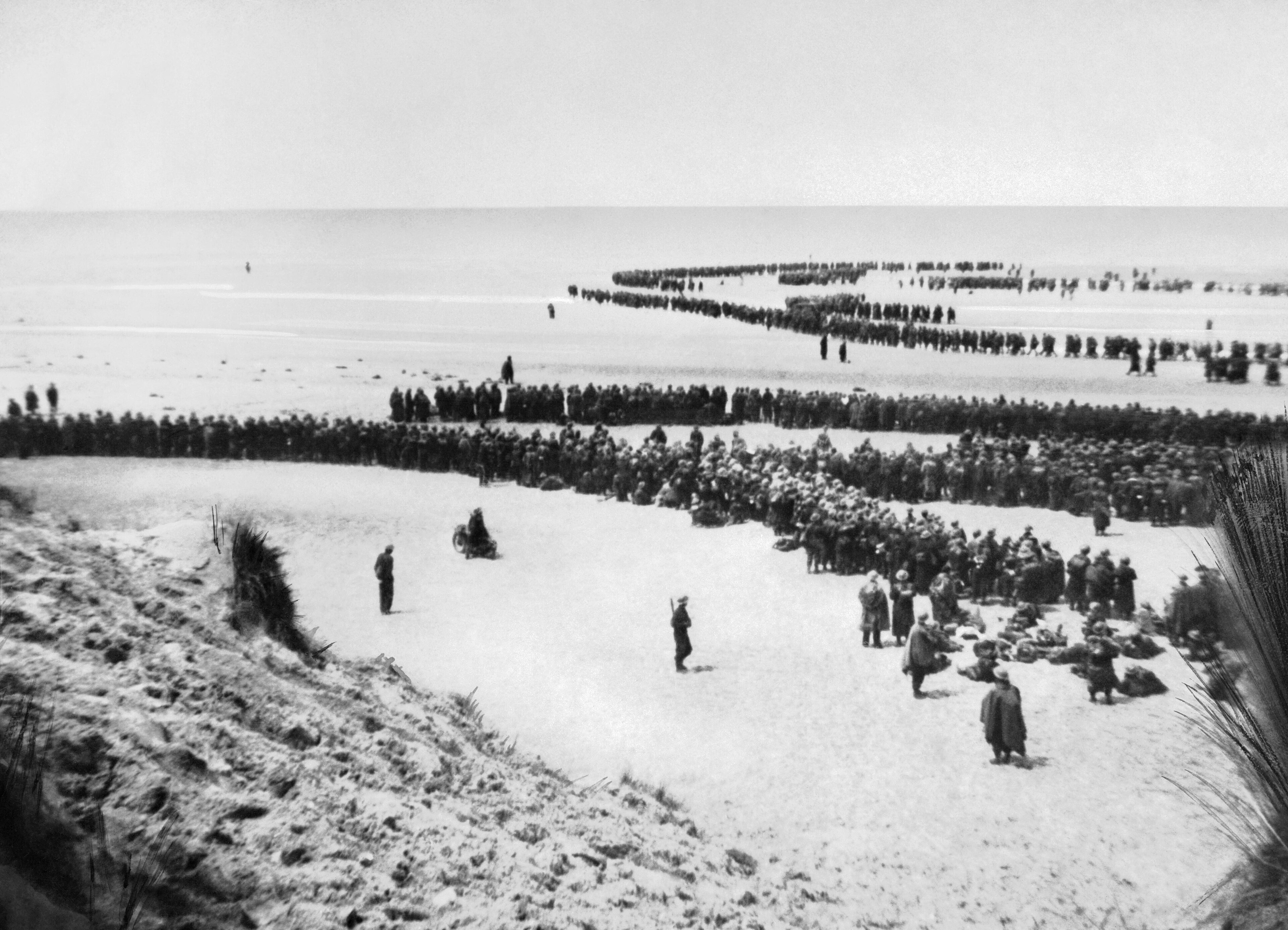
With the British Expeditionary Force and French First Army encircled against the Channel coast, Operation Dynamo evacuated over 338,000 Allied soldiers between 26 May and 4 June 1940 — carried by destroyers and a famous fleet of around 850 civilian little ships. Nearly all heavy equipment was abandoned on the beaches, but the rescued men formed the nucleus of every British army that fought for the rest of the war.
 Western Europe campaign
 Battle of Britain & The Blitz
Southern England 51.2°N 0.5°E
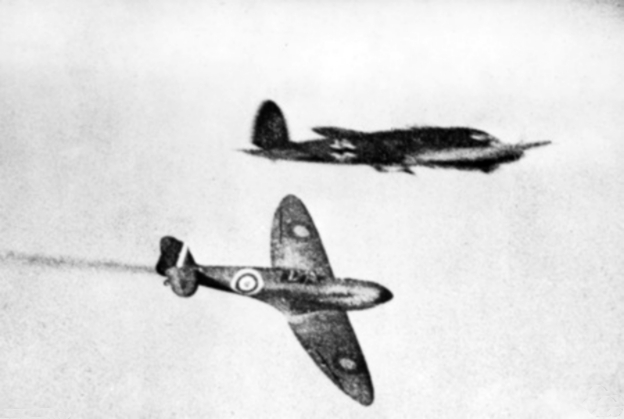
Through the summer and autumn of 1940 the Luftwaffe tried to destroy RAF Fighter Command as the prelude to invasion, in the first battle fought entirely in the air. Churchill's Few turned back an air force that had never been beaten, and the night Blitz on British cities that followed killed over 40,000 civilians. It was Germany's first defeat of the war, and it kept Britain fighting.
 North Africa campaign
 North Africa Campaign
North Africa 32.9°N 13.2°E
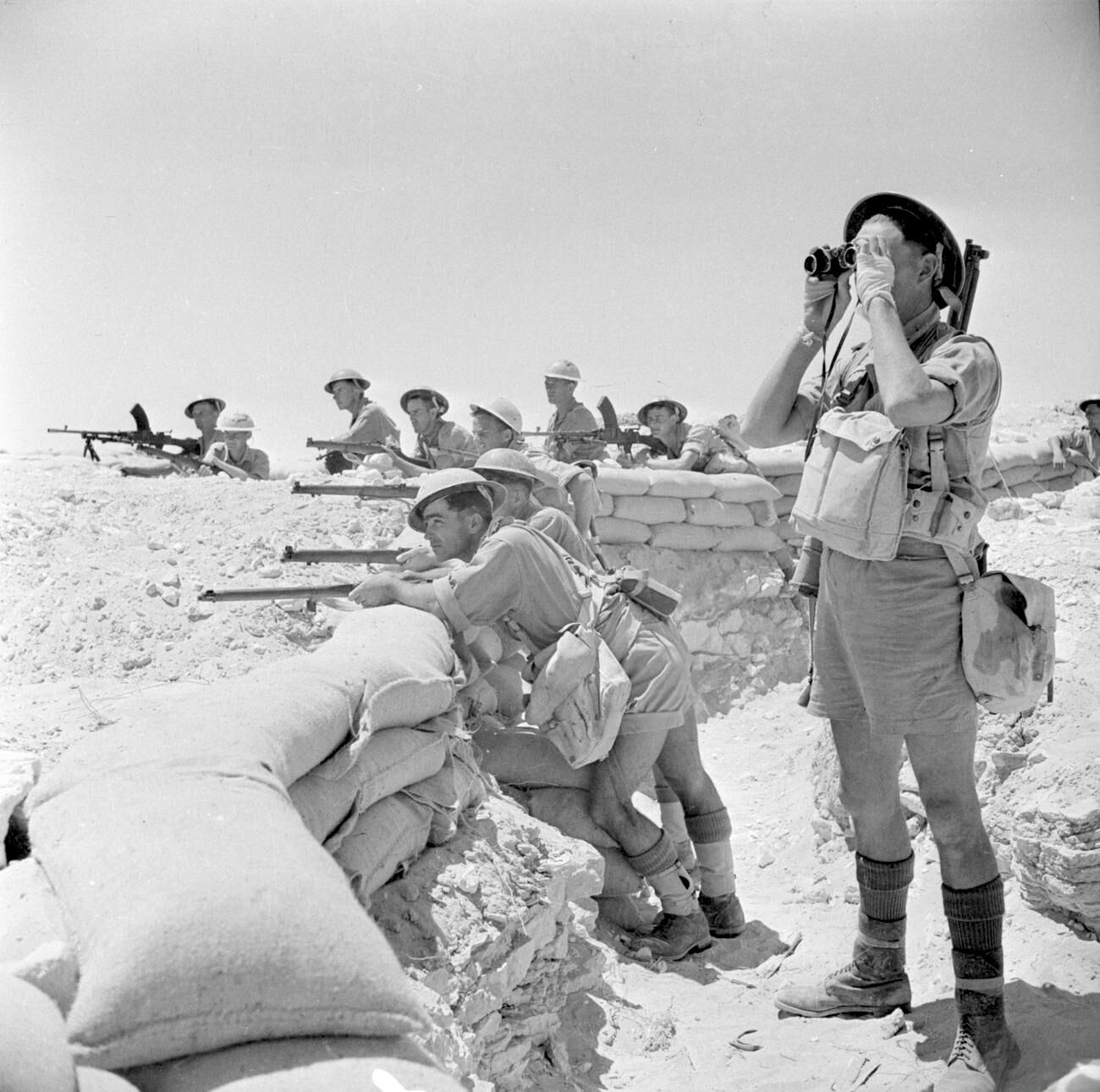
From 1940 to 1943 the desert war swung back and forth across Libya and Egypt as Rommel's Afrika Korps duelled the British Eighth Army over supply lines and oil. The British victory at El Alamein in late 1942 and the Anglo-American Torch landings caught the Axis in a vice, ending with the surrender of over 250,000 Axis troops in Tunisia in May 1943 — the US Army's first hard schooling against the Wehrmacht.
 Eastern Front campaign
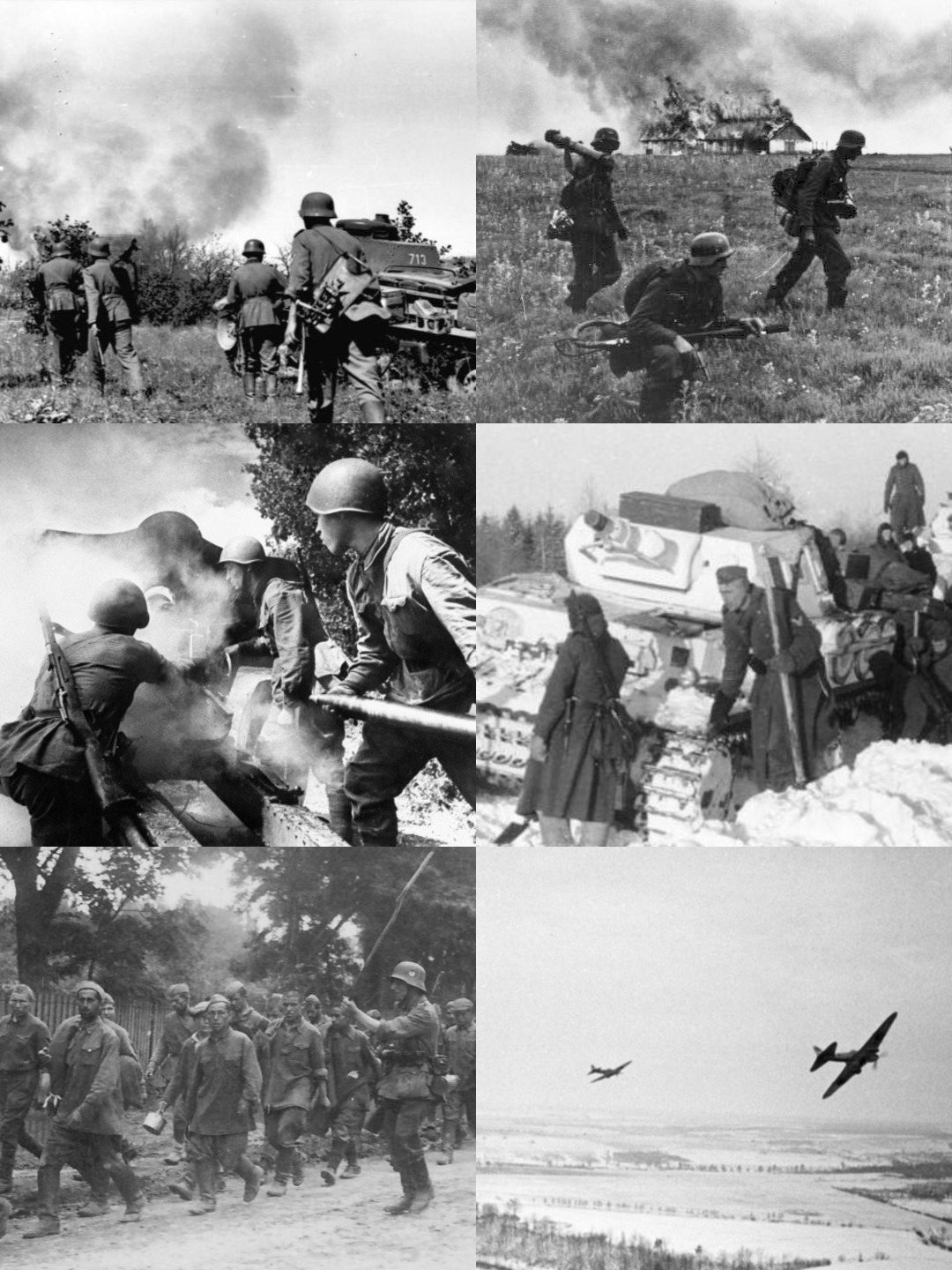
 Operation Barbarossa
Soviet Union 55.8°N 37.6°E
On 22 June 1941 nearly four million Axis troops invaded the Soviet Union along an 1,800-mile front — the largest invasion in human history. German spearheads reached the gates of Moscow by December before being thrown back by the Soviet winter counteroffensive. The Eastern Front it opened would consume roughly eight of every ten German soldiers killed in the war.
 Eastern Front campaign
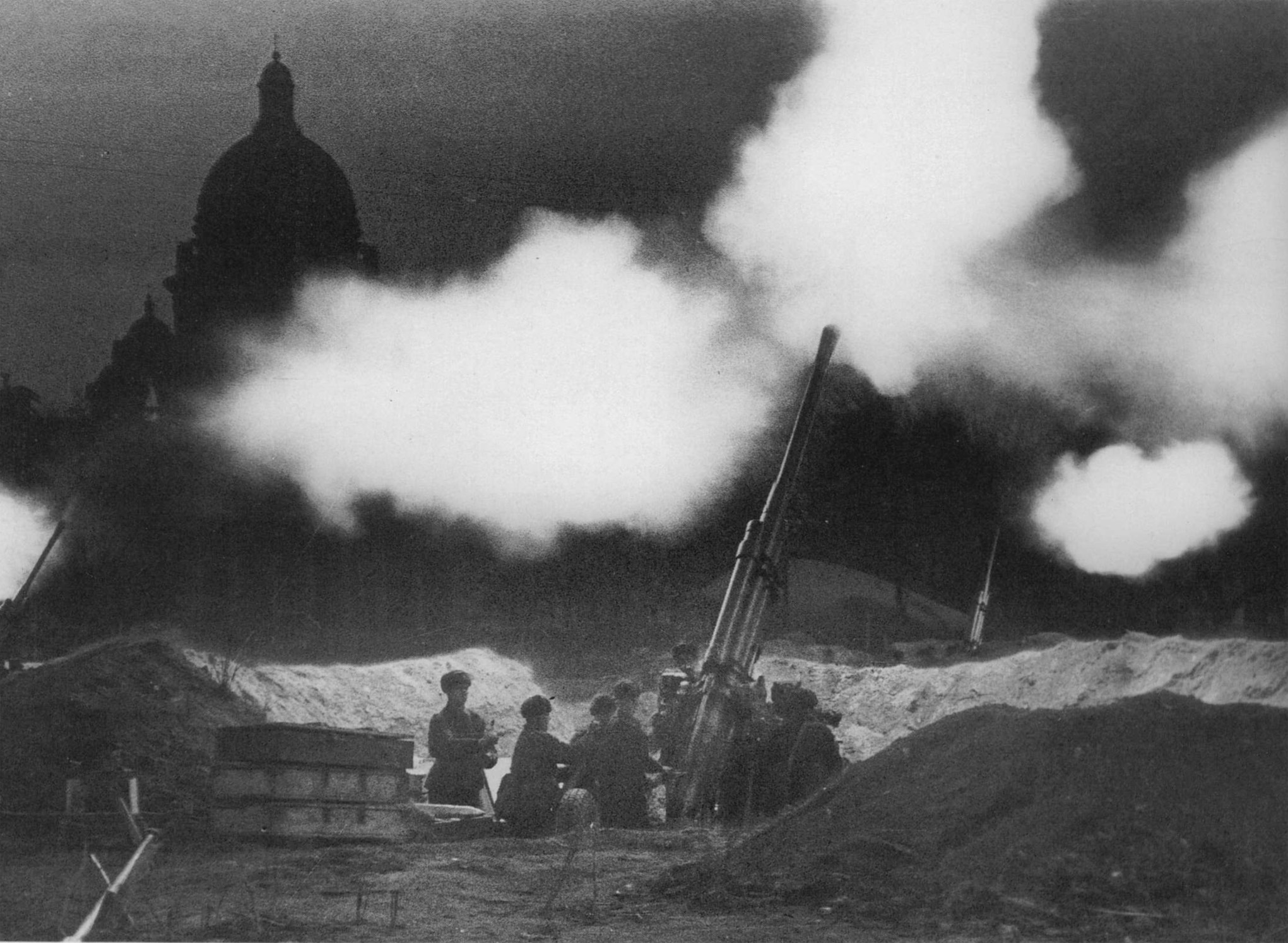
 Siege of Leningrad
Leningrad, USSR 59.9°N 30.3°E
For 872 days German and Finnish armies sealed off Russia's second city, intending to starve it out of existence. Around a million civilians died, most of hunger in the catastrophic winter of 1941-42, supplied only by the Road of Life across frozen Lake Ladoga. The city never fell — the longest and deadliest siege in modern history.
 Occupied Europe atrocity
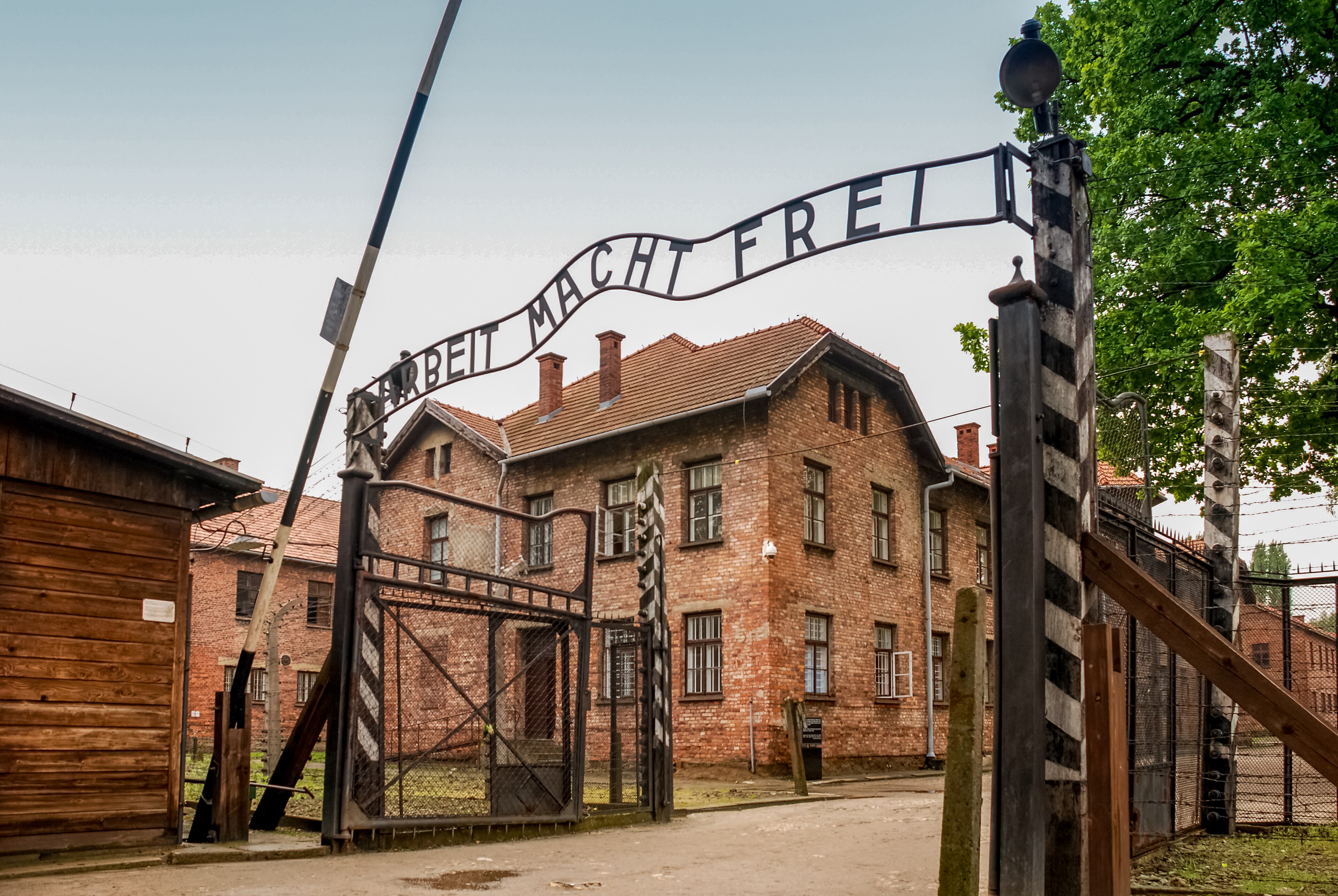
 The Holocaust
Across occupied Europe 50.0°N 20.0°E
The Nazi regime systematically murdered six million Jews, alongside Roma, Soviet prisoners of war, disabled people, and political enemies. What began with persecution and ghettoisation escalated to industrialised killing at purpose-built extermination camps. Its literature — diaries, survivor memoirs, and testimony — forms some of the most important writing of the twentieth century.
 Pacific battle
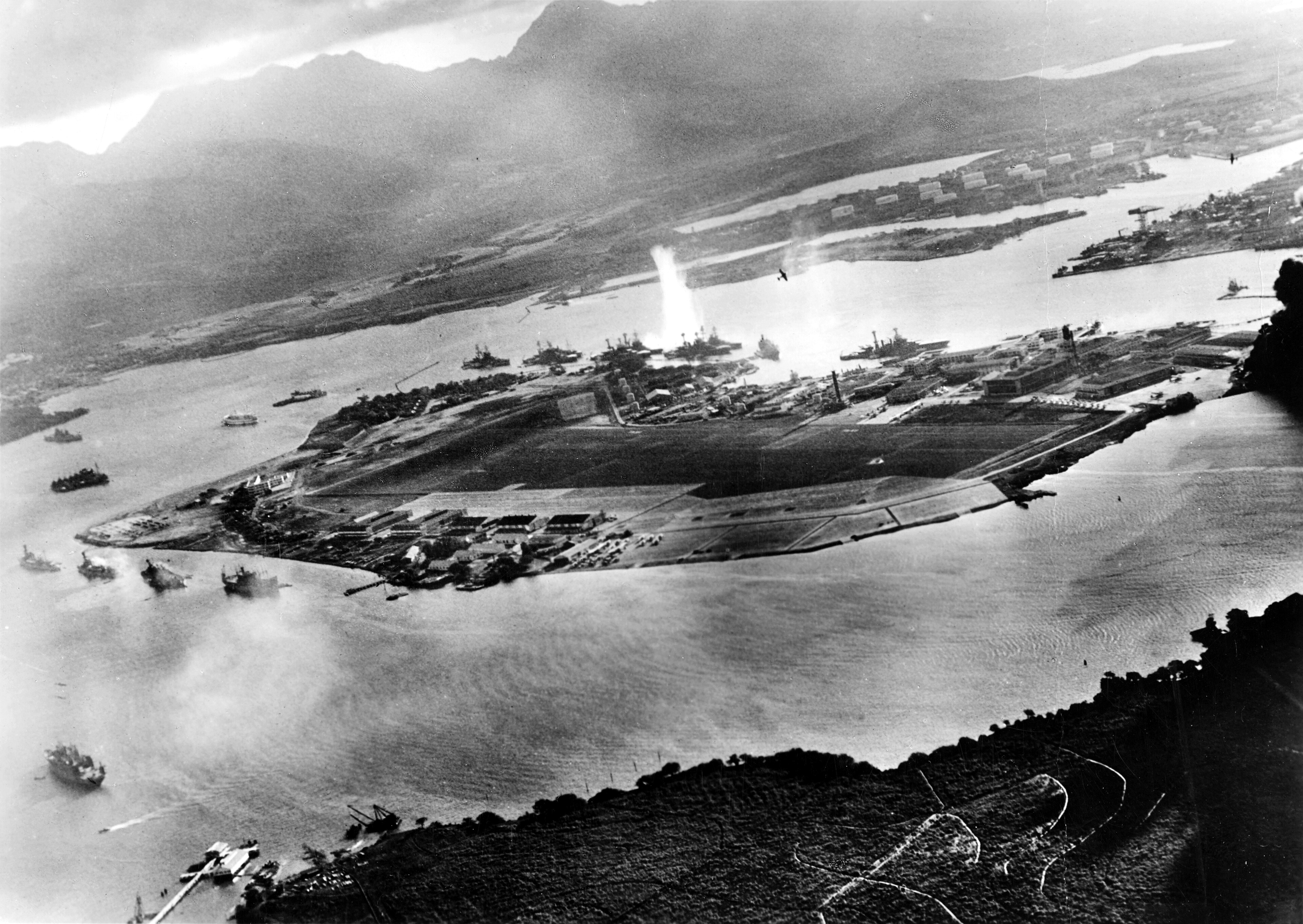
 Attack on Pearl Harbor
Oahu, Hawaii 21.4°N 157.9°W
On the morning of 7 December 1941, 353 Japanese carrier aircraft struck the US Pacific Fleet at anchor in two waves, killing 2,403 Americans and sinking or damaging eight battleships — though the American aircraft carriers were at sea and escaped. The United States declared war the next day, and Hitler declared war on America four days later, turning two regional wars into a single global one.
 Pacific campaign
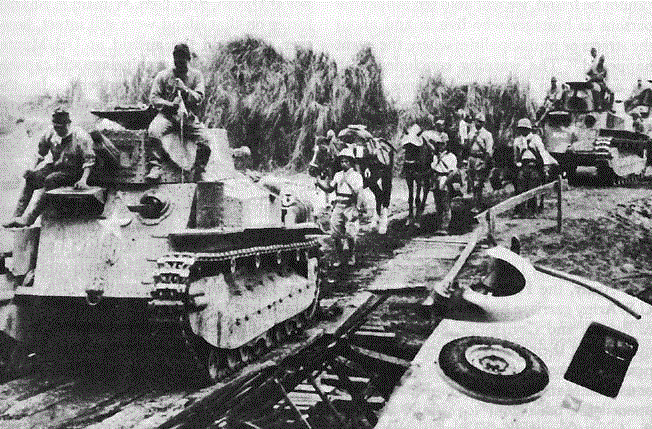
 Fall of the Philippines & Bataan
Luzon, Philippines 14.6°N 120.5°E
Japan's conquest of the Philippines ended in April 1942 with the surrender of some 76,000 starving American and Filipino troops on Bataan — the largest capitulation in American history. The Death March that followed killed thousands on the road to the camps, and the prisoners' three-year ordeal became the war's defining atrocity story for the American public.
 Pacific battle
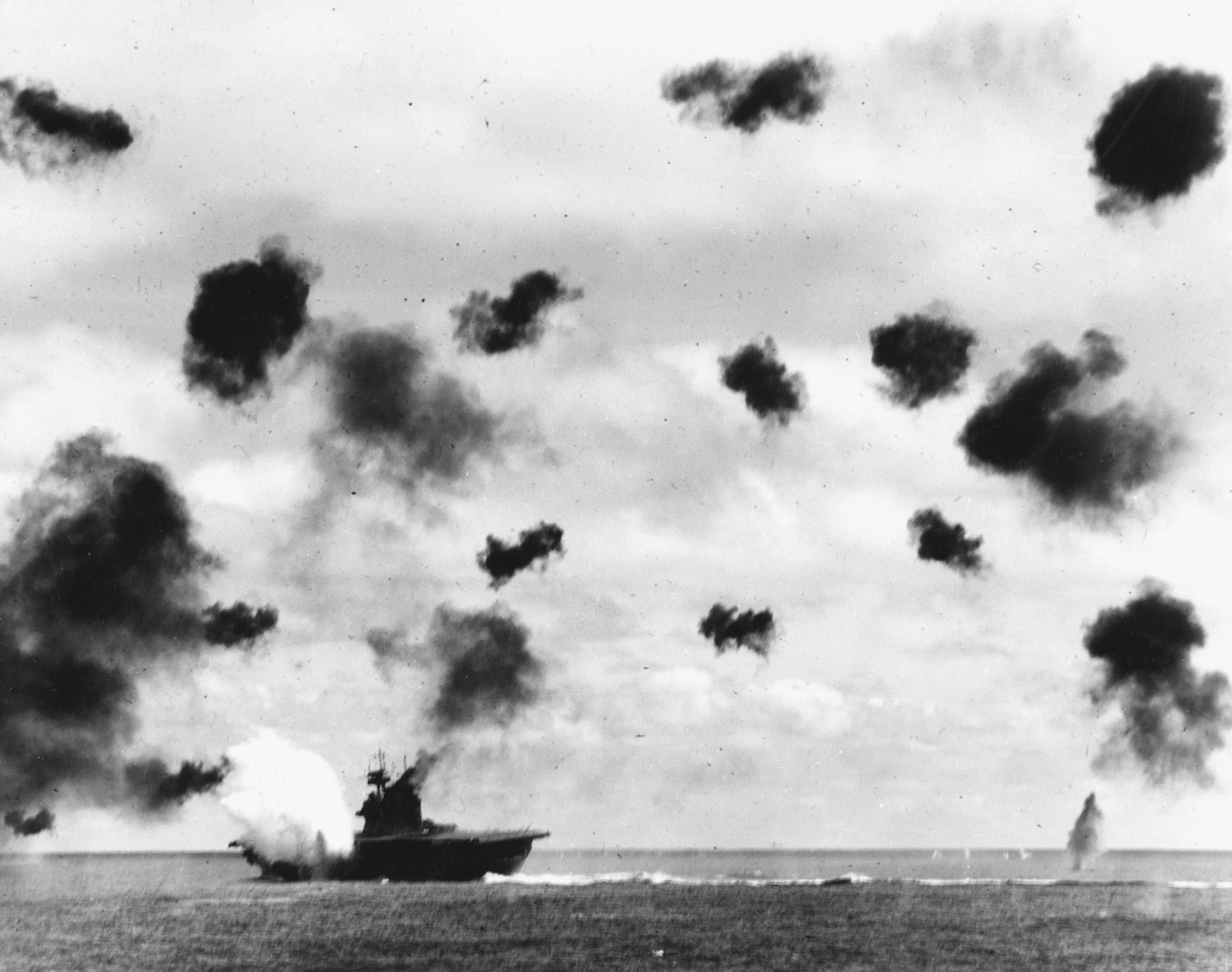
 Battle of Midway
Midway Atoll 28.2°N 177.4°W
Between 4 and 7 June 1942, American codebreakers allowed the outnumbered US Pacific Fleet to ambush the Japanese carrier force, sinking all four fleet carriers of the strike force in exchange for the USS Yorktown. Six months after Pearl Harbor, Japan had lost the core of its naval air power and never regained the strategic initiative.
 Pacific campaign
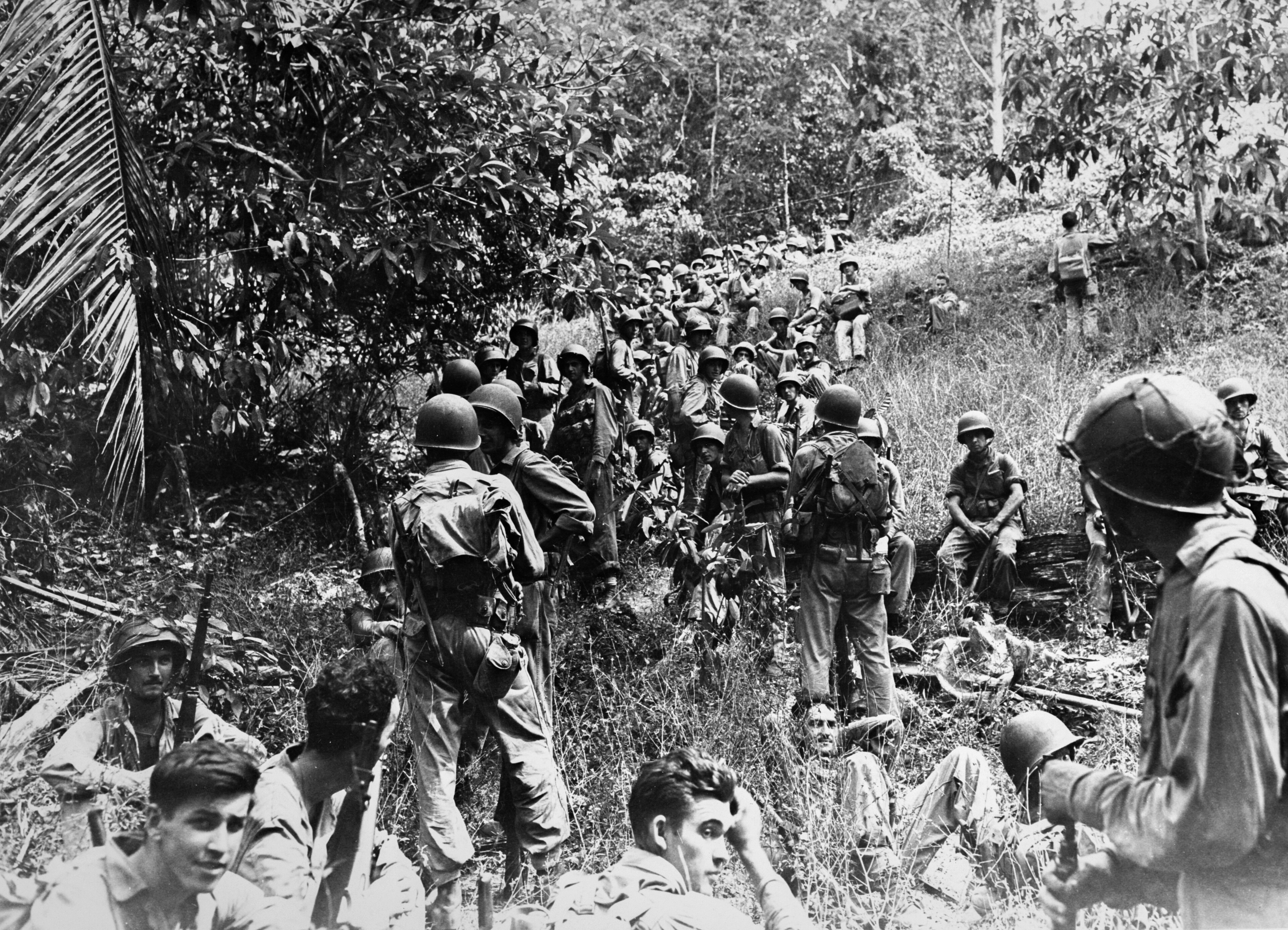
 Guadalcanal Campaign
Solomon Islands 9.4°S 160.0°E
The first major Allied ground offensive of the Pacific War began in August 1942 and ran for six months of attritional jungle fighting, starvation, and seven major naval battles in waters that earned the name Ironbottom Sound. By February 1943 Japan had been forced onto the defensive for good — at the cost of more American sailors dead at sea than Marines on the island.
 Southeast Asia campaign
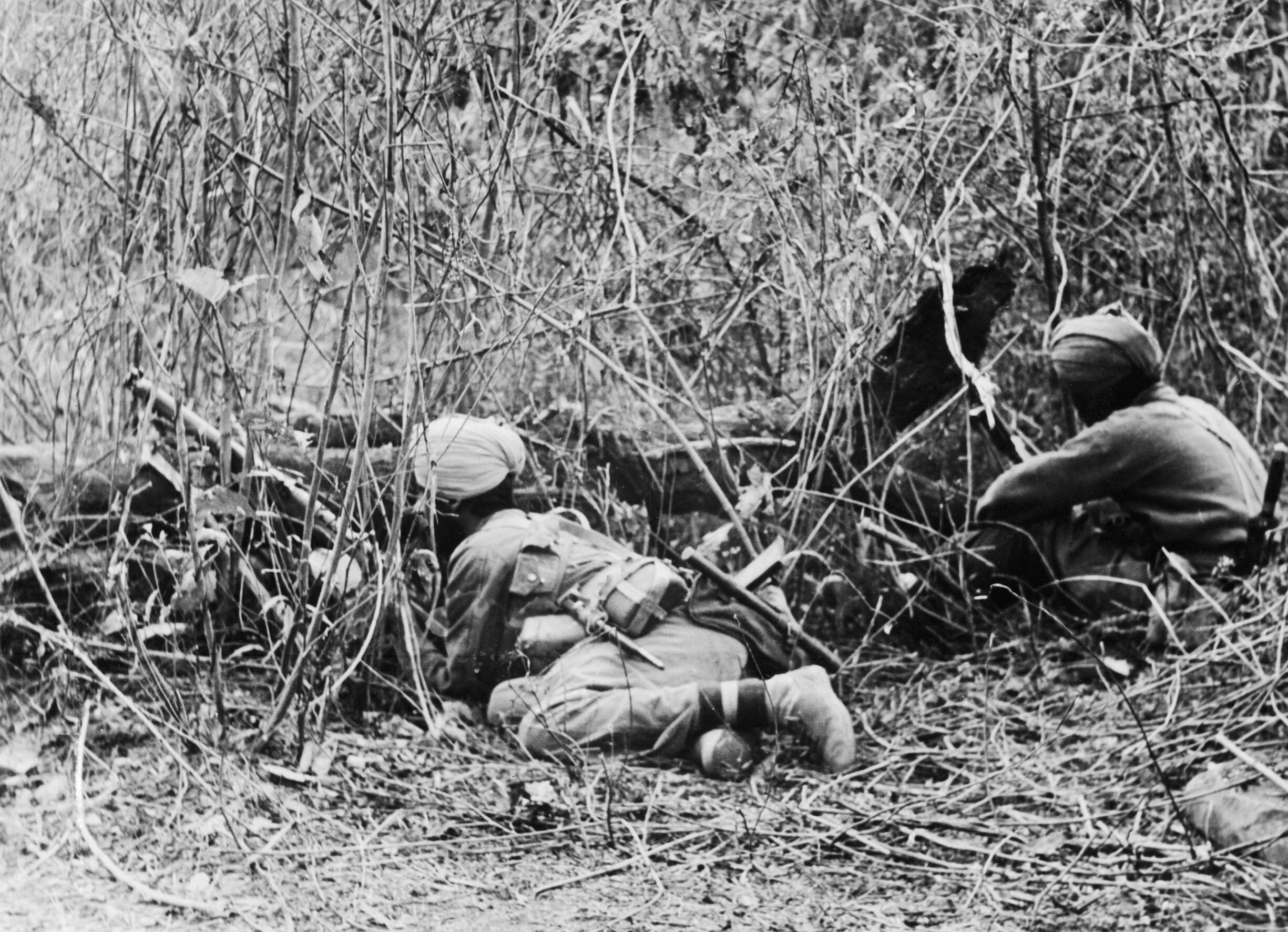
 Burma Campaign
Burma & India 22.0°N 96.0°E
Fought across some of the worst terrain on earth, the war in Burma ran from Japan's 1942 conquest — the longest retreat in British history — to Slim's Fourteenth Army destroying two Japanese armies at Imphal, Kohima, and the Irrawaddy. It remains the Forgotten War: monsoon, jungle, disease, and a multinational army of British, Indian, African, American, and Chinese troops.
 Eastern Front battle
 Battle of Stalingrad
Stalingrad, USSR 48.7°N 44.5°E
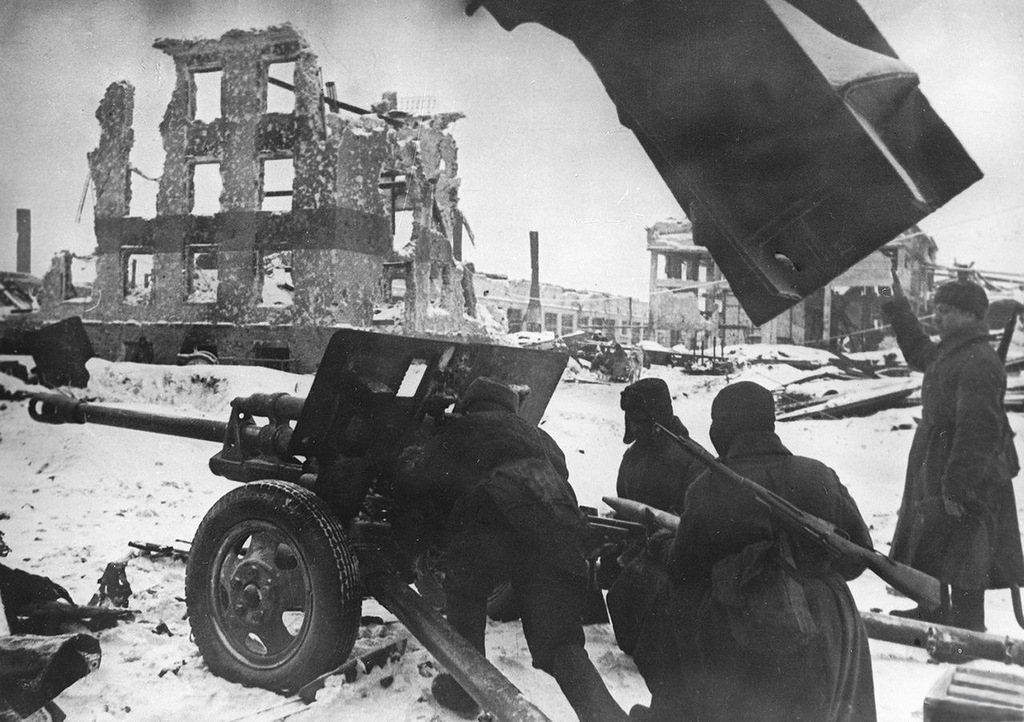
From August 1942 to February 1943 the fight for Stalingrad consumed nearly two million casualties in house-to-house combat the Germans called Rattenkrieg — rat war. The Soviet encirclement of November 1942 trapped the entire German Sixth Army; roughly 91,000 starving survivors surrendered in February, of whom only a few thousand ever returned home. It was the turning point of the war in Europe.
 Eastern Front battle
 Battle of Kursk
Kursk salient, USSR 51.7°N 36.2°E
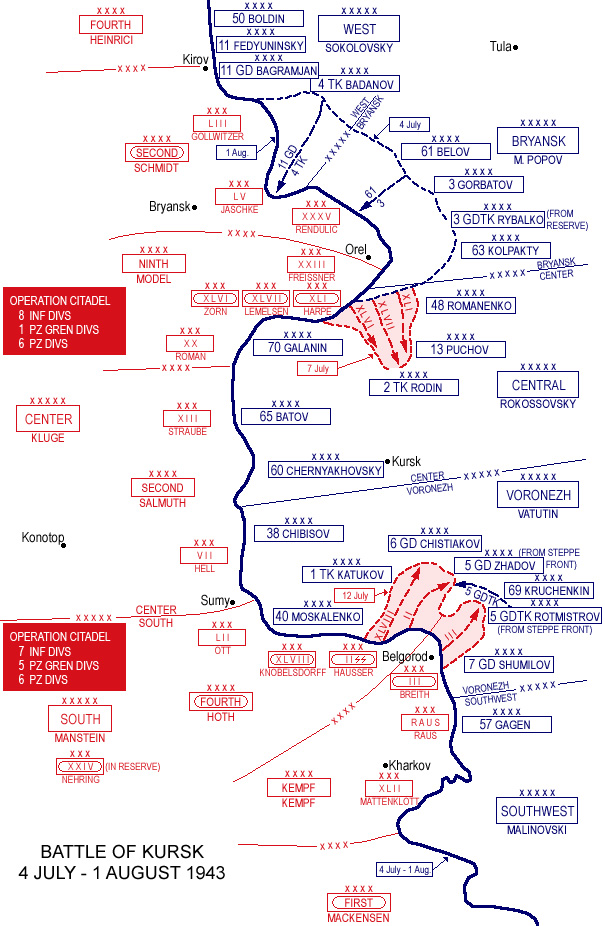
In July 1943 Germany threw its rebuilt panzer arm at the Kursk salient in Operation Citadel — the largest armored battle ever fought, involving some 8,000 tanks and assault guns. The Soviets knew it was coming and bled the offensive white in days. It was the last German strategic offensive in the East; from Kursk to Berlin the Red Army never stopped advancing.
 Southern Europe campaign
 Italian Campaign
Sicily & Italy 41.9°N 12.5°E
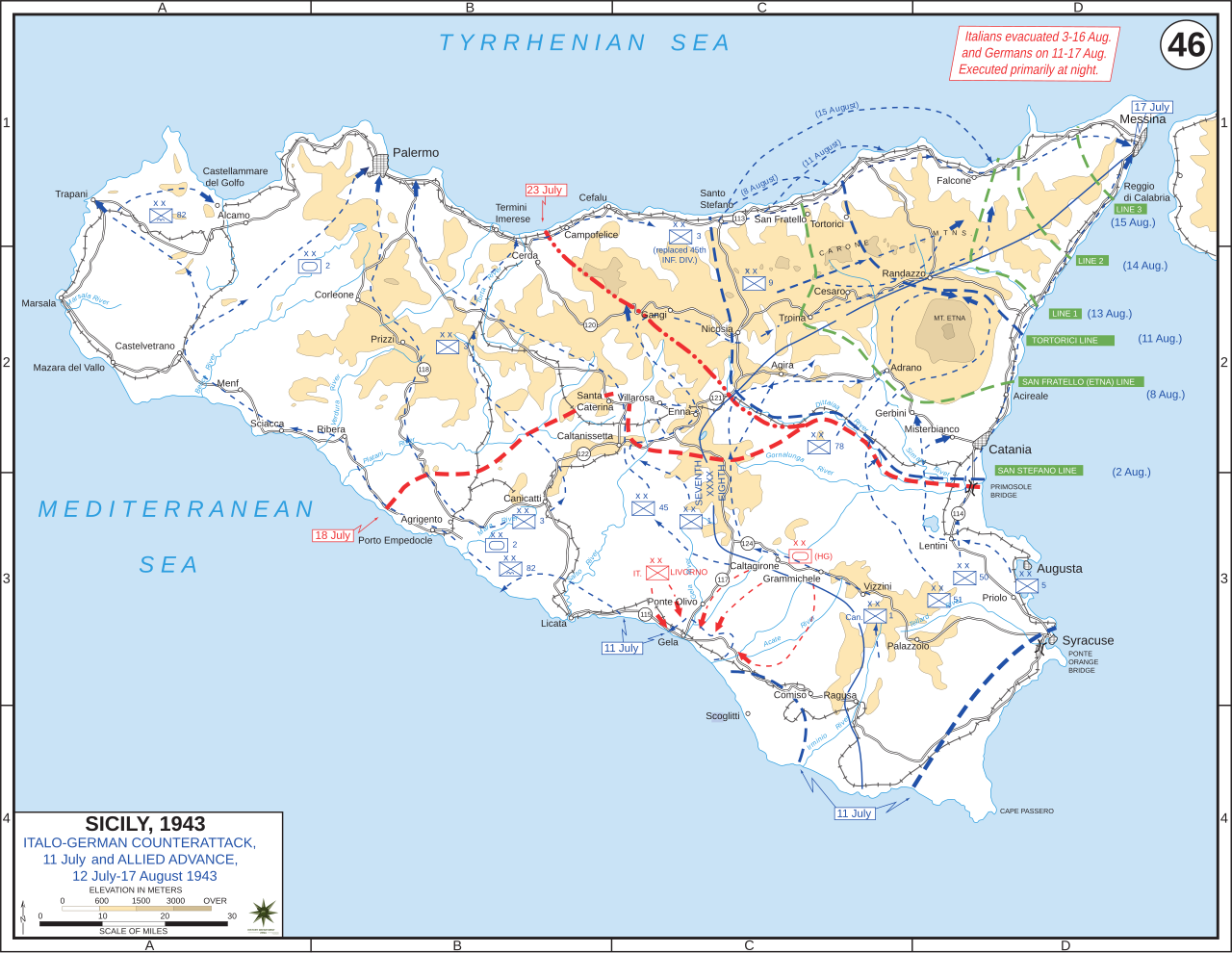
The invasion of Sicily in July 1943 knocked Mussolini from power within weeks, but the campaign that followed became one of the war's cruellest slogs — Salerno, the Gustav Line, Monte Cassino, Anzio — as Allied armies ground up the mountainous peninsula against skilful German defence until the final days of the war.
 Western Europe battle
 D-Day / Normandy Landings
Normandy, France 49.3°N 0.9°W
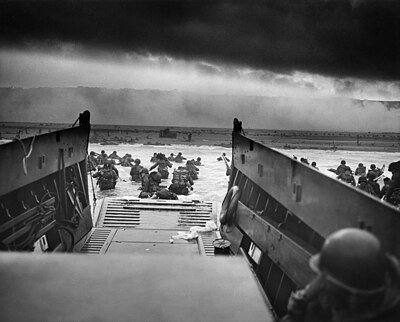
On 6 June 1944 some 156,000 Allied troops landed across five Normandy beaches, delivered by nearly 7,000 vessels in the largest amphibious operation ever mounted. The brutal weeks of fighting that followed in the bocage broke the German front in the West; Paris was liberated by the end of August.
 Western Europe battle
 Operation Market Garden
Netherlands 51.8°N 5.5°E
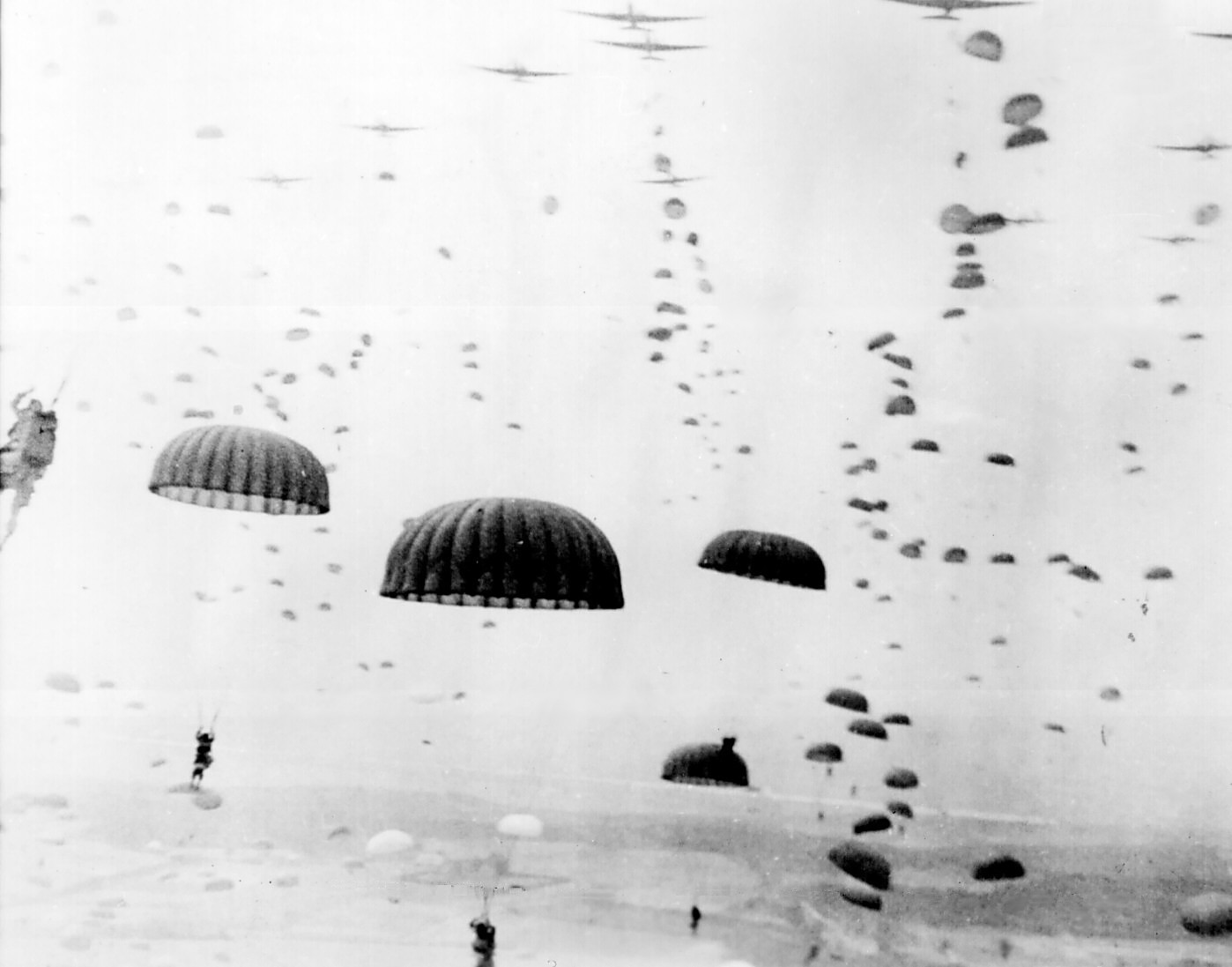
In September 1944, 35,000 Allied airborne troops dropped into the Netherlands to seize a corridor of bridges toward the Rhine and end the war by Christmas. The plan failed at the final bridge at Arnhem — a bridge too far — where the British 1st Airborne Division was effectively destroyed, losing nearly 8,000 of its 10,000 men.
 Western Europe battle
 Battle of the Bulge
Ardennes, Belgium 50.2°N 5.7°E
On 16 December 1944 Germany threw 200,000 men through the snow-bound Ardennes in a final gamble to split the Allied armies and retake Antwerp. The surprise was total, the defence of Bastogne became legend, and the month-long battle that followed was the largest in US Army history, costing some 19,000 American dead.
 Pacific battle
 Battle of Leyte Gulf
Philippines 10.5°N 125.5°E
Fought between 23 and 26 October 1944 across four separate engagements, Leyte Gulf was the largest naval battle in history and saw the first organised kamikaze attacks. The Imperial Japanese Navy committed nearly its entire remaining strength and was finished as a fighting force.
 Pacific battle
 Battle of Iwo Jima
Iwo Jima, Japan 24.8°N 141.3°E
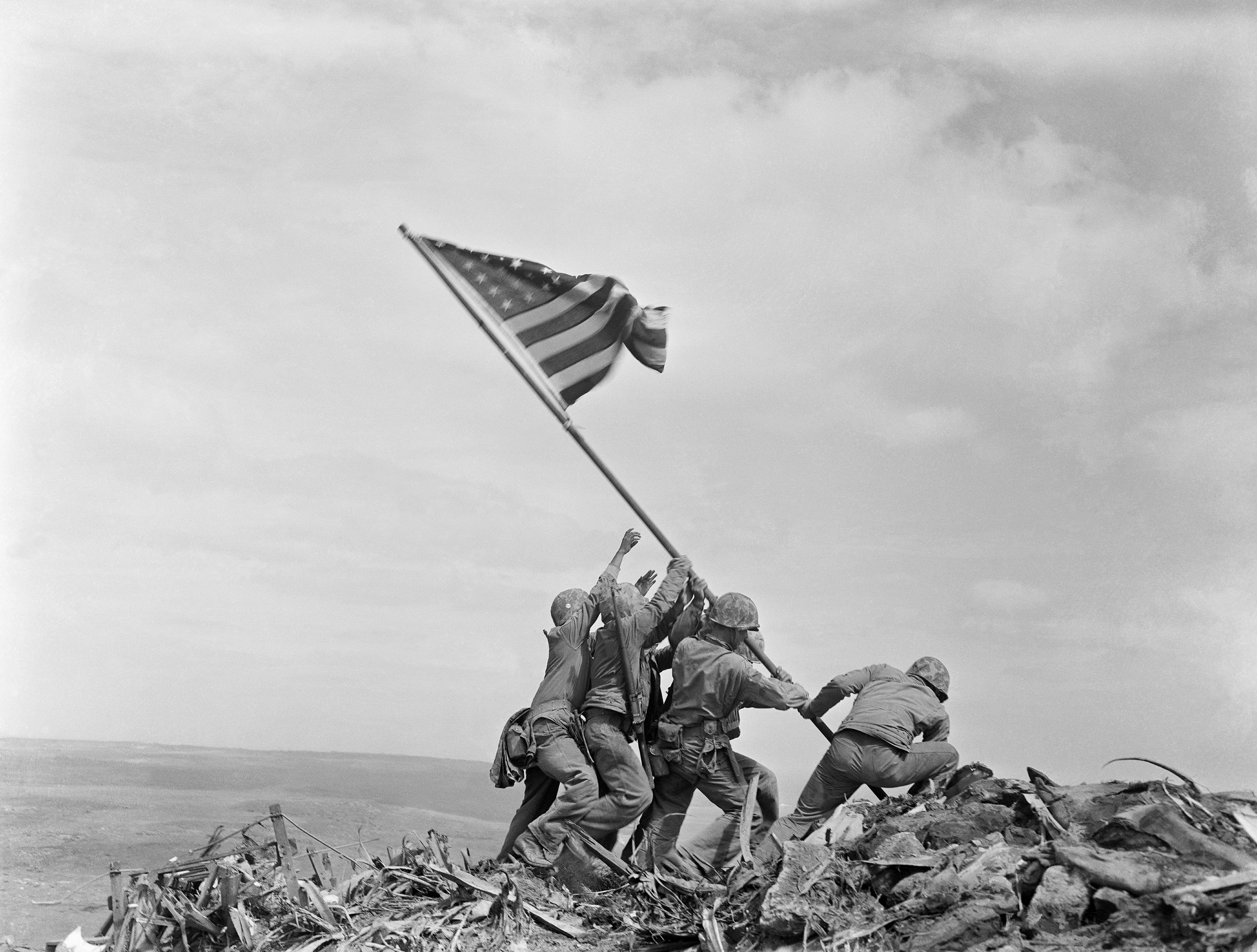
Thirty-six days of fighting for eight square miles of volcanic rock, beginning 19 February 1945. The flag-raising on Mount Suribachi on day five became the most famous photograph of the war, but the battle ground on for five more weeks — nearly 7,000 Marines died, and of roughly 21,000 Japanese defenders, almost none surrendered.
 Central Europe bombing
 Bombing of Dresden
Dresden, Germany 51.1°N 13.7°E
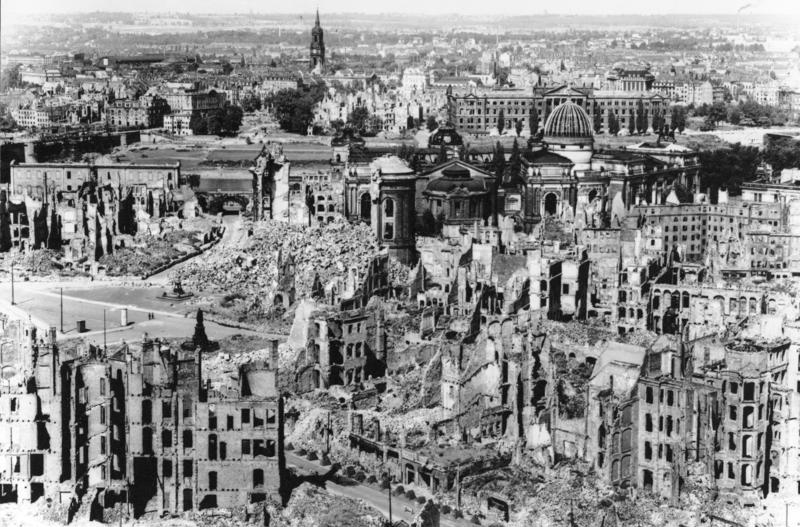
Over the nights of 13-15 February 1945, RAF and USAAF bombers created a firestorm that destroyed the historic centre of Dresden and killed around 25,000 people. The raid has been debated ever since as a symbol of the moral cost of area bombing — witnessed firsthand by a young American POW named Kurt Vonnegut.
 Pacific battle
 Battle of Okinawa
Okinawa, Japan 26.3°N 127.8°E
The last great battle of the war, from April to June 1945, was also the bloodiest of the Pacific: some 12,500 Americans dead, over 100,000 Japanese soldiers killed, and as many as 150,000 Okinawan civilians caught in between, while kamikazes savaged the fleet offshore. Its casualty rates shaped the American decision to use the atomic bomb rather than invade Japan.
 Pacific bombing
 Atomic Bombings
Hiroshima & Nagasaki 34.4°N 132.5°E
On 6 and 9 August 1945 atomic bombs destroyed Hiroshima and Nagasaki, killing well over 150,000 people by the end of the year — the only use of nuclear weapons in war. Japan announced its surrender on 15 August, ending the Second World War.
 Central Europe battle
 Fall of Berlin
Berlin, Germany 52.5°N 13.4°E
From 16 April 1945, 2.5 million Soviet troops fought their way into the capital of the Third Reich street by street. Hitler killed himself in his bunker on 30 April; the city garrison capitulated on 2 May; and the war in Europe ended six days later. Roughly 80,000 Soviet soldiers died taking the city.