 51.0°N 2.4°E Western Europe
Dunkirk Evacuation
Briefing
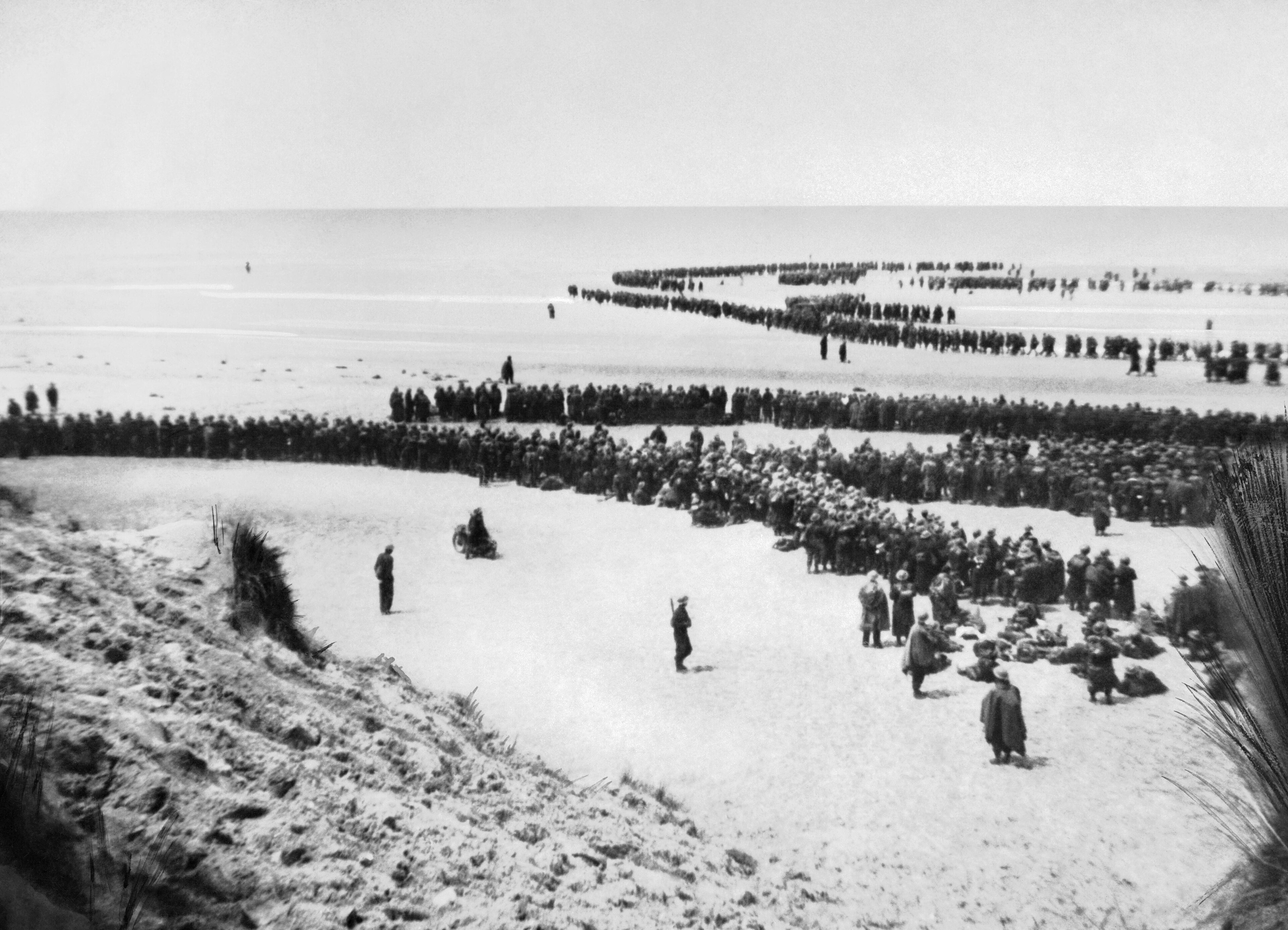
With the British Expeditionary Force and French First Army encircled against the Channel coast, Operation Dynamo evacuated over 338,000 Allied soldiers between 26 May and 4 June 1940 — carried by destroyers and a famous fleet of around 850 civilian little ships. Nearly all heavy equipment was abandoned on the beaches, but the rescued men formed the nucleus of every British army that fought for the rest of the war.
Books Covering This Event (9)
Popular History

A monumental history of Nazi Germany from its origins through its destruction, written by a journalist who reported from Hitler's Berlin.

The full story of Operation Dynamo, from the encirclement to the last little ship home.

A single-volume history of the entire war by the most influential military historian of the 20th century.

A global history of the war focused on the experience of ordinary people — soldiers and civilians — caught in it.
Historical Fiction

An American naval officer and his family are swept up in the opening years of the war, from Hitler's invasion of Poland to Pearl Harbor.

A child's lie destroys two lives; the retreat to Dunkirk gives the lie its terrible setting.

Two French sisters resist the German occupation in their own ways — one by hiding a child, one by guiding airmen over the Pyrenees.
Memoir

Shirer's actual diary as CBS correspondent in Berlin, from the Anschluss to the fall of France — published while the war still hung in the balance.

Churchill's six-volume memoir-history of the entire war, from the gathering storm to triumph and tragedy.
This Event on Screen
Screen adaptations of books on this page, each linked to the book it came from: Atonement (2007).
The War in Books: Dunkirk
A catastrophe remembered as a deliverance, and the books that hold both ideas together.
Dunkirk is unusual among great events of the war in that it was a defeat which became a national legend almost at once. Churchill warned Parliament in June 1940 that wars are not won by evacuations, but that caution has never quite taken hold. His own account in The Second World War is worth reading partly for this reason, since it is both a record and a contribution to the myth, written by the man with the most at stake in how it was understood.
For balance, go to the other side of the line. William Shirer’s Berlin Diary was worked up from notes kept at the time by an American correspondent who followed the German victories of 1940. It was edited for publication, but it still has an immediacy few later histories can match: when it appeared, no one knew how the story would end. His later Rise and Fall of the Third Reich puts it into the larger arc of Nazi Germany, and John Keegan and Max Hastings both place it in the wider war, with Hastings closer to individual experience. Herman Wouk’s The Winds of War carries the same years into fiction. Dunkirk rewards reading across all of these, because it looks so different depending on who is telling it.