 50.0°N 30.0°W Atlantic
Battle of the Atlantic
Briefing
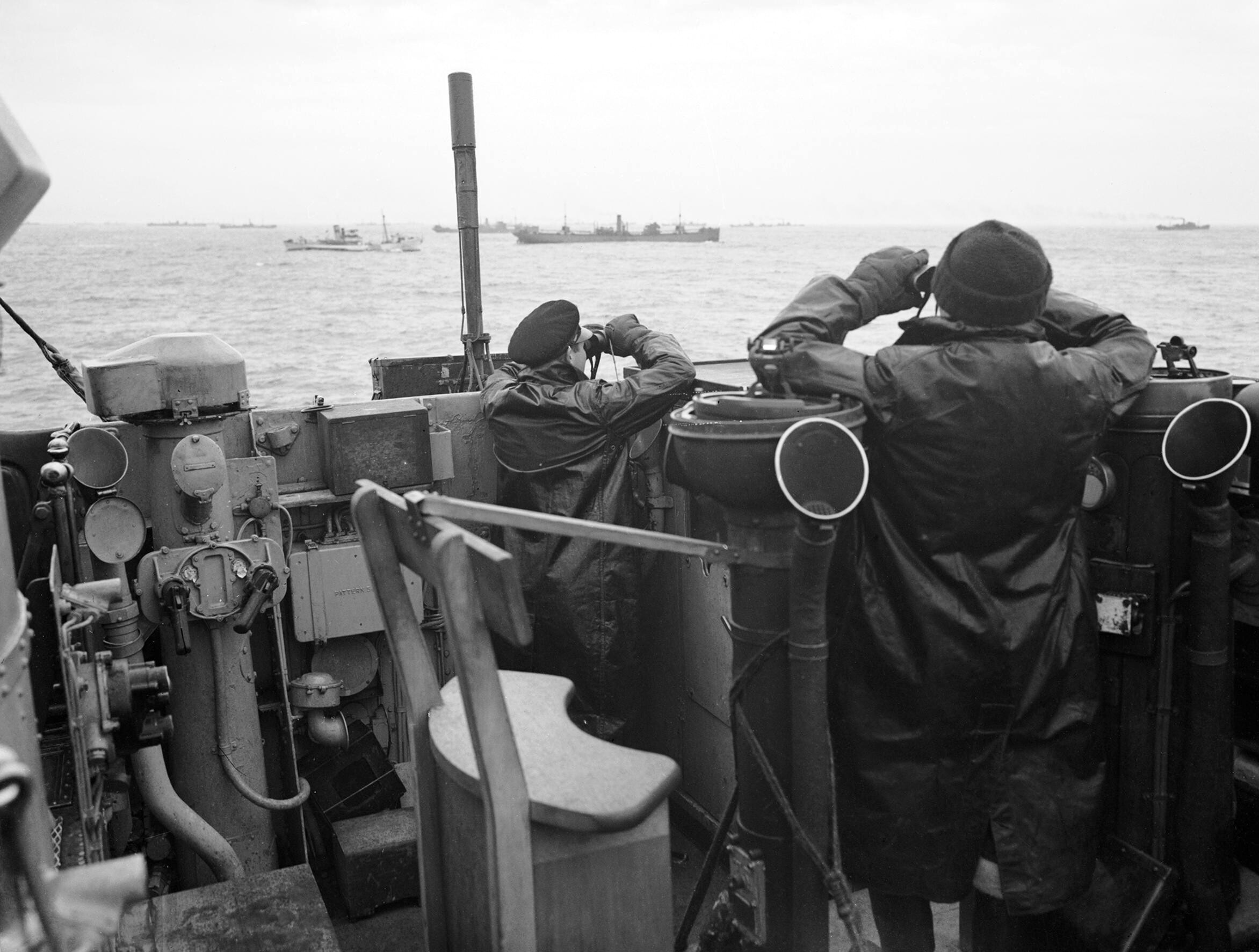
The longest campaign of the war ran from its first day to its last, as German U-boats tried to sever the convoy lifeline between North America and Britain. More than 30,000 Allied merchant seamen died, along with roughly three of every four German submariners who put to sea. Victory in mid-1943 — won by codebreaking, escort carriers, and long-range aircraft — made everything that followed possible.
Books Covering This Event (9)
Historical Fiction

The war of the Atlantic escorts told through one corvette and her crew, by an officer who lived it.

One Arctic convoy escort driven past breaking point on the Murmansk run.

Forty-eight sleepless hours in the head of a destroyer captain shepherding a convoy through the wolfpacks.

A novel of one U-boat patrol in 1941, written by a war correspondent who sailed on the real thing.

Three women of Bletchley Park, a broken friendship, and a traitor hunt on the eve of a royal wedding.


This Event on Screen
Screen adaptations of books on this page, each linked to the book it came from: Das Boot (1981).
The War in Books: The Battle of the Atlantic
The longest continuous campaign of the war, written largely by the men who fought it.
Without the Atlantic convoys, nothing else in the western war could have happened, and yet the campaign was so slow and so hard to picture that it has rarely held public attention the way a land battle does. The novelists have done the most to fix that, in part because several of them served at sea. Nicholas Monsarrat’s The Cruel Sea, the story of a corvette and its crew, grew out of his own wartime service in escorts. Lothar-Günther Buchheim’s Das Boot, written by a correspondent who sailed on a U-boat patrol, gives the other side with an almost physical sense of confinement. Read back to back, they turn the same ocean into a single, mutual ordeal. Alistair MacLean’s HMS Ulysses takes the story north to the Arctic convoys.
Two further books explain how the battle was won. Richard Overy’s Why the Allies Won treats the sea lanes as a key to the whole war. Andrew Hodges’s Alan Turing: The Enigma covers the intelligence story through the man who led the early work on naval Enigma, and Kate Quinn’s The Rose Code offers a fictional view of Bletchley Park. The victory took place in offices as well as on the water, and the shelf reflects both.