 59.9°N 30.3°E Eastern Front
Siege of Leningrad
Briefing
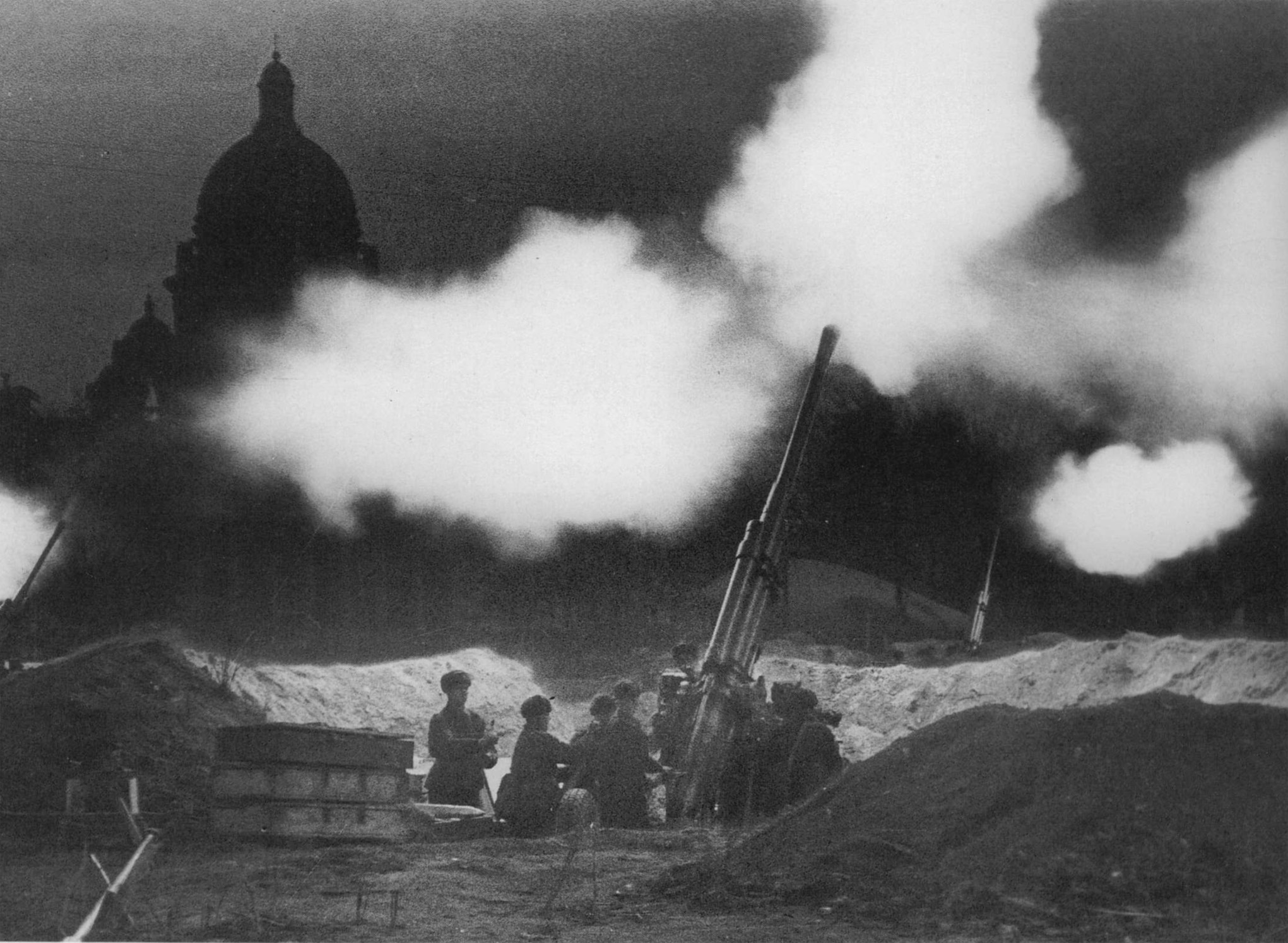
For 872 days German and Finnish armies sealed off Russia's second city, intending to starve it out of existence. Around a million civilians died, most of hunger in the catastrophic winter of 1941-42, supplied only by the Road of Life across frozen Lake Ladoga. The city never fell — the longest and deadliest siege in modern history.
Books Covering This Event (6)
Popular History

The BBC's Moscow correspondent, who spent the entire war in the USSR, writes the inside account of the Soviet war effort.

The classic account of the siege of Leningrad — a million dead in a city the Soviets barely admitted was starving.

Shostakovich writes his Seventh Symphony inside besieged Leningrad, and a starving orchestra performs it to the world.
Historical Fiction

A love story that begins on the day Germany invades and descends with Leningrad into the siege winter.

One Leningrad family endures the first siege winter — bread ration by bread ration.

Two young men in besieged Leningrad are given an absurd errand to save their lives: find a dozen eggs for a colonel's daughter's wedding cake.
The War in Books: The Siege of Leningrad
Almost nine hundred days of hunger, and a literature that refuses to look away.
For decades the true scale of the Leningrad siege was hard to discuss inside the Soviet Union, where the official story preferred heroism to the facts of mass starvation. Harrison Salisbury’s The 900 Days, published in 1969, did much to put the human reality before Western readers, and it remains the classic account. Alexander Werth’s Russia at War, by a correspondent who spent the war in the USSR, provides the wider Soviet context.
What sets this shelf apart is how much of it is fiction and how well that fiction works. Helen Dunmore’s The Siege stays with one family through the first winter, and its power lies in the arithmetic of rations. David Benioff’s City of Thieves is a much stranger book, an absurd quest for a dozen eggs that uses dark comedy to get at the desperation of the city. Paullina Simons’s The Bronze Horseman takes the form of a love story and descends into the siege with it. M.T. Anderson’s nonfiction Symphony for the City of the Dead, aimed at younger readers, follows Shostakovich and the Seventh Symphony. Together they show a city that kept making art while it starved, and it is hard to think of a stranger or more moving subject.