 53.5°N 20.1°E Eastern Front
Battle of Tannenberg
Briefing
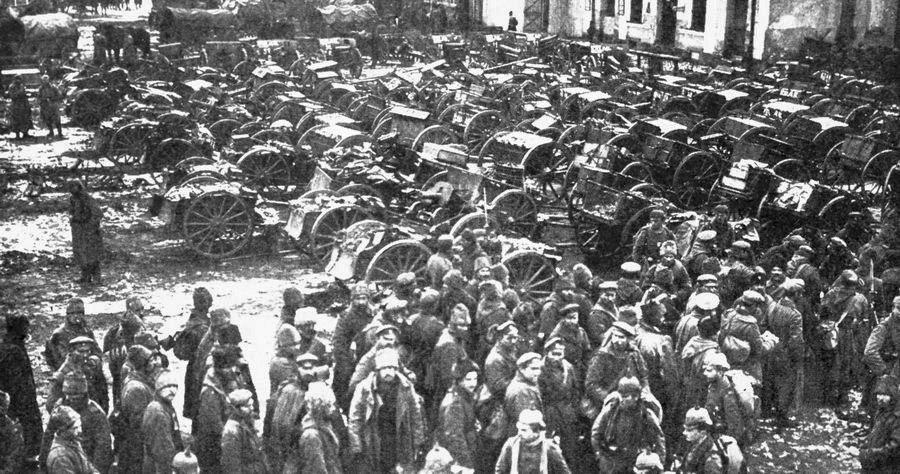
Between 26 and 30 August 1914 the German Eighth Army encircled and destroyed the Russian Second Army in East Prussia, taking some 92,000 prisoners. The victory made national heroes of Hindenburg and Ludendorff and set the pattern of the Eastern Front: a war of movement across vast distances, fought at a scale the West rarely matched.
Books Covering This Event (3)
Popular History

A day-by-day narrative of the war's first month, from the funeral of Edward VII to the Marne.

A single-volume military history of the entire war by the most influential military historian of the 20th century.

The War in Books: Tannenberg
The great German victory of 1914, and the front most readers never reach.
English-language memory of the First World War is overwhelmingly a memory of the Western Front, which makes Tannenberg easy to overlook. It should not be. In five days the Germans destroyed an entire Russian army, and the victory set Hindenburg and Ludendorff on the road to becoming the most powerful figures in wartime Germany, with consequences that outlasted the war. The name itself was chosen with an eye to history: it recalled a medieval German defeat at the hands of Poles and Lithuanians, now symbolically reversed.
Barbara Tuchman gives the battle its most vivid telling in The Guns of August, with the poor coordination and miscommunication of the Russian generals at the centre of her account. John Keegan’s The First World War sets it in the wider war. The specialist’s book is Norman Stone’s The Eastern Front 1914–1917, still the classic study in English, which treats the whole theatre seriously and looks hard at why Imperial Russia failed. Anyone who has read deeply on Flanders and the Somme will find Stone a corrective. The Eastern war was fought across enormous distances, moved in ways the West did not, and ended with the fall of three empires.