 51.1°N 13.7°E Central Europe
Bombing of Dresden
Briefing
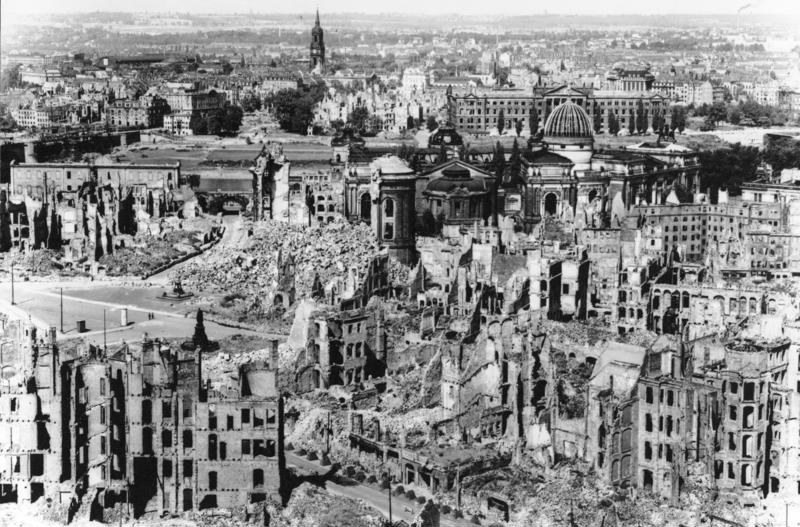
Over the nights of 13-15 February 1945, RAF and USAAF bombers created a firestorm that destroyed the historic centre of Dresden and killed around 25,000 people. The raid has been debated ever since as a symbol of the moral cost of area bombing — witnessed firsthand by a young American POW named Kurt Vonnegut.
Books Covering This Event (9)
Historical Fiction

Billy Pilgrim becomes unstuck in time, drifting between his experiences as a POW in Dresden and an alien zoo.
Popular History

The mass tunnel breakout from Stalag Luft III in March 1944 — 76 airmen out, 50 murdered by the Gestapo on recapture.

617 Squadron, the bouncing bomb, and the breaching of the Ruhr dams in May 1943.

The RAF's night offensive against Germany — 55,000 aircrew dead, German cities in ashes, and the question of what it achieved.

The B-24 crews over Germany, told through the squadron of a young pilot named George McGovern.

The Eighth Air Force's bomber war over Germany — the deadliest American campaign of the war.

A German ace escorts a crippled American bomber to safety over the North Sea — and the two pilots meet again fifty years later.
Academic

An analytical answer to the war's biggest question — production, technology, morale, and the sea lanes.

The making and breaking of the Nazi economy — the war explained through fuel, steel, grain, and labor.
This Event on Screen
Screen adaptations of books on this page, each linked to the book it came from: Slaughterhouse-Five (1972).
The War in Books: Dresden
Three days of bombing, a great novel, and the moral argument that surrounds them.
Kurt Vonnegut’s Slaughterhouse-Five has done more than any history to fix Dresden in public memory. Vonnegut was there as an American prisoner of war, sheltered underground in a slaughterhouse, and he spent more than twenty years trying to write about it. The book that resulted, with its time travel and its refrain of “So it goes,” is an admission that the experience could not be told straight. For many readers it remains the first and last word on the raids, which is a reason to read it with the histories close at hand.
Max Hastings’s Bomber Command is the essential companion. It is a critical study of the RAF’s night offensive against German cities, and it asks what the bombing achieved and at what cost, to Germans and to the crews who flew the missions. Donald Miller’s Masters of the Air does something similar for the American Eighth Air Force. Richard Overy’s Why the Allies Won and Adam Tooze’s The Wages of Destruction bring the economic argument: what the bombing did to Germany’s capacity to fight, a question on which historians still differ. Dresden raises the hardest questions of the air war, and it is best approached with Vonnegut’s anguish and Hastings’s analysis side by side.