 26.3°N 127.8°E Pacific
Battle of Okinawa
Briefing
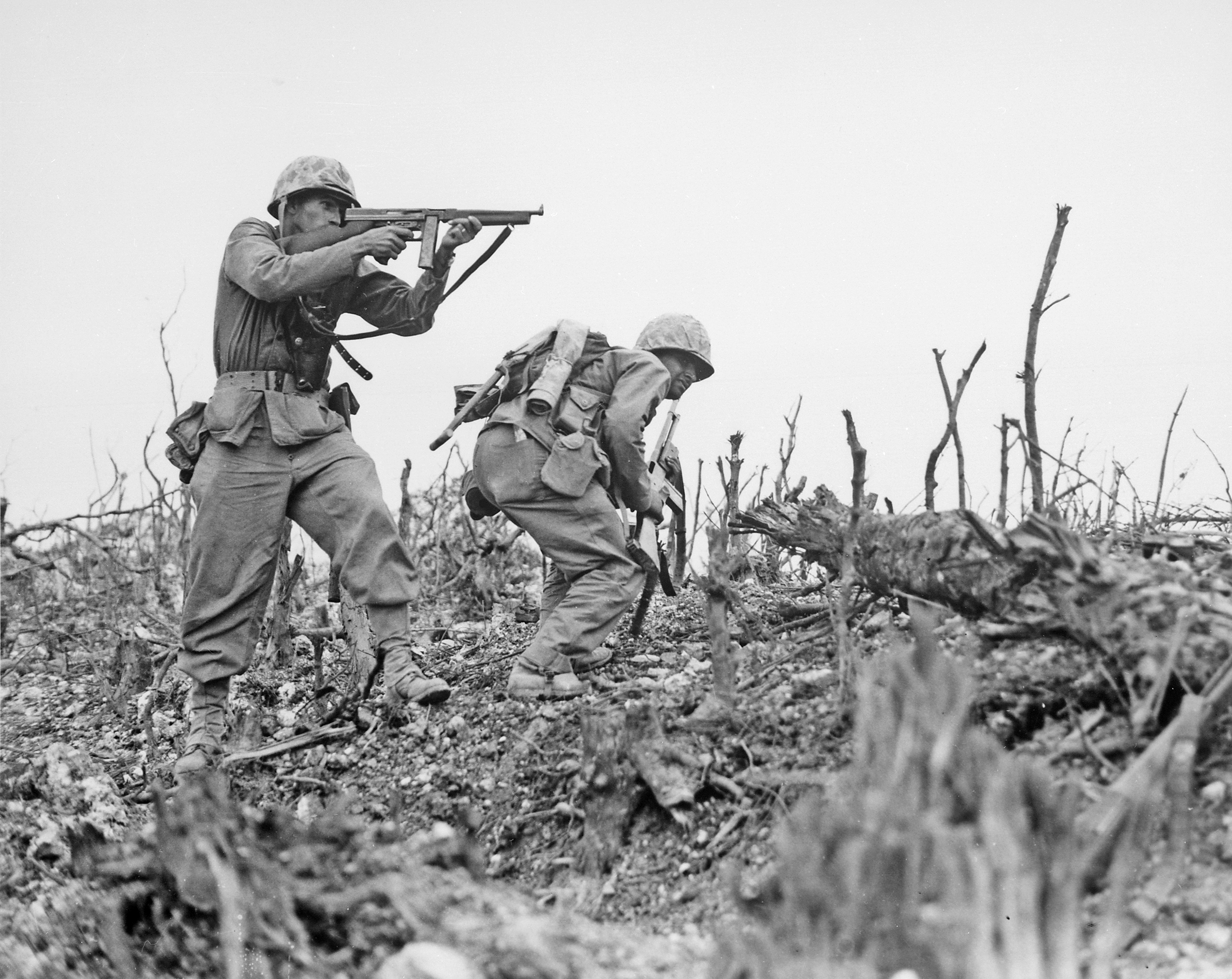
The last great battle of the war, from April to June 1945, was also the bloodiest of the Pacific: some 12,500 Americans dead, over 100,000 Japanese soldiers killed, and as many as 150,000 Okinawan civilians caught in between, while kamikazes savaged the fleet offshore. Its casualty rates shaped the American decision to use the atomic bomb rather than invade Japan.
Books Covering This Event (8)
Popular History

The United States Marines against Japan, island by island, by a man who fought as one.

The classic single-volume history of the American war against Japan.

The brutal final year of the Pacific War, from the Philippines to the atomic bombings.

The official companion to the HBO series, following five men through the island campaigns.

The final volume of the Pacific War Trilogy: Leyte Gulf, the kamikazes, Iwo Jima, Okinawa, and the bomb.
Memoir

A young ensign survives the suicide sortie of the largest battleship ever built, sent to Okinawa with fuel for one way.

William Manchester's memoir of his time as a Marine in the Pacific, interwoven with a pilgrimage to the battlefields decades later.

A Marine's harrowing memoir of combat on Peleliu and Okinawa.
The War in Books: Okinawa
The final battle of the Pacific, and the memoir many consider the war’s finest.
Eugene Sledge’s With the Old Breed is widely regarded as the greatest American memoir of the Second World War, and its account of Okinawa is the hardest part of it. Sledge was a mortarman with the Marines, and he kept notes in his pocket New Testament; decades later he turned them into a book of remarkable honesty about what combat did to him and those around him. No later history makes this battle more real. William Manchester’s Goodbye, Darkness adds a different kind of memory, a veteran’s return to the islands and to what he had buried.
Mitsuru Yoshida’s Requiem for Battleship Yamato tells a part of the story most English readers never hear: the doomed sortie of the giant battleship, by one of the few men who survived it. Ian Toll’s Twilight of the Gods and Max Hastings’s Retribution give the wider history, and Ronald Spector’s Eagle Against the Sun the long view of the Pacific War. All of them must face the fact at the centre of this battle: the huge toll on Okinawan civilians, and the way its cost weighed on American plans for invading Japan. Start with Sledge. Then read the histories, to understand why this battle mattered so much for what came after.