 49.9°N 2.9°E Western Front
German Spring Offensive
Briefing
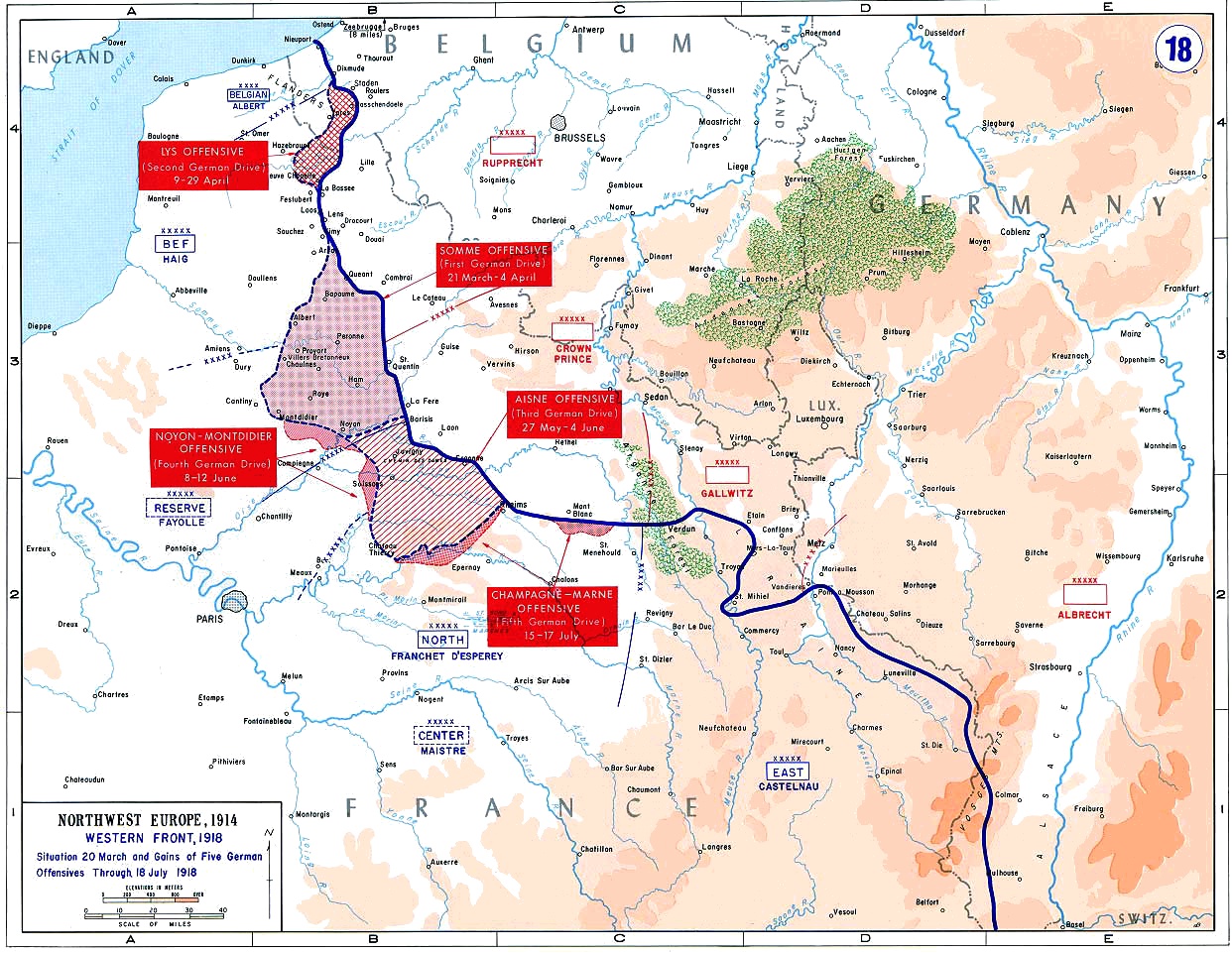
In March 1918, freed from the Eastern Front by Russia's collapse and racing the arrival of the Americans, Germany launched the Kaiserschlacht — five great offensives using new stormtrooper tactics. The Allies were driven back further than at any time since 1914, but the advance outran its supplies and stalled short of Paris, spending Germany's last reserves of men.
Books Covering This Event (3)


This Event on Screen
Screen adaptations of books on this page, each linked to the book it came from: All Quiet on the Western Front (2022).
The War in Books: The Spring Offensive
Germany’s last gamble in 1918, and the moment the war nearly turned.
The popular picture of the Western Front is of a line that never moved, and the spring of 1918 is the proof that it is wrong. With Russia out of the war and American troops arriving in growing numbers, Ludendorff had a brief window, and he used it for a series of massive attacks. Infiltration tactics broke through where years of frontal assaults had failed. For a few weeks the Allies were in real danger. Then the advance outran its supply, and the men Germany lost could not be replaced.
Ernst Jünger’s Storm of Steel is the essential witness, since the author was a stormtroop officer who fought in the opening of the offensive and was wounded in it. His account carries the intensity that the new tactics demanded of the men who carried them out. Remarque’s All Quiet on the Western Front shows the same German army from the opposite moral position, as a generation used up by 1918. Hew Strachan’s The First World War provides the strategic frame: why Germany attacked, why it had to, and how the failure in spring opened the way to its defeat by autumn.