 21.4°N 157.9°W Pacific
Attack on Pearl Harbor
Briefing
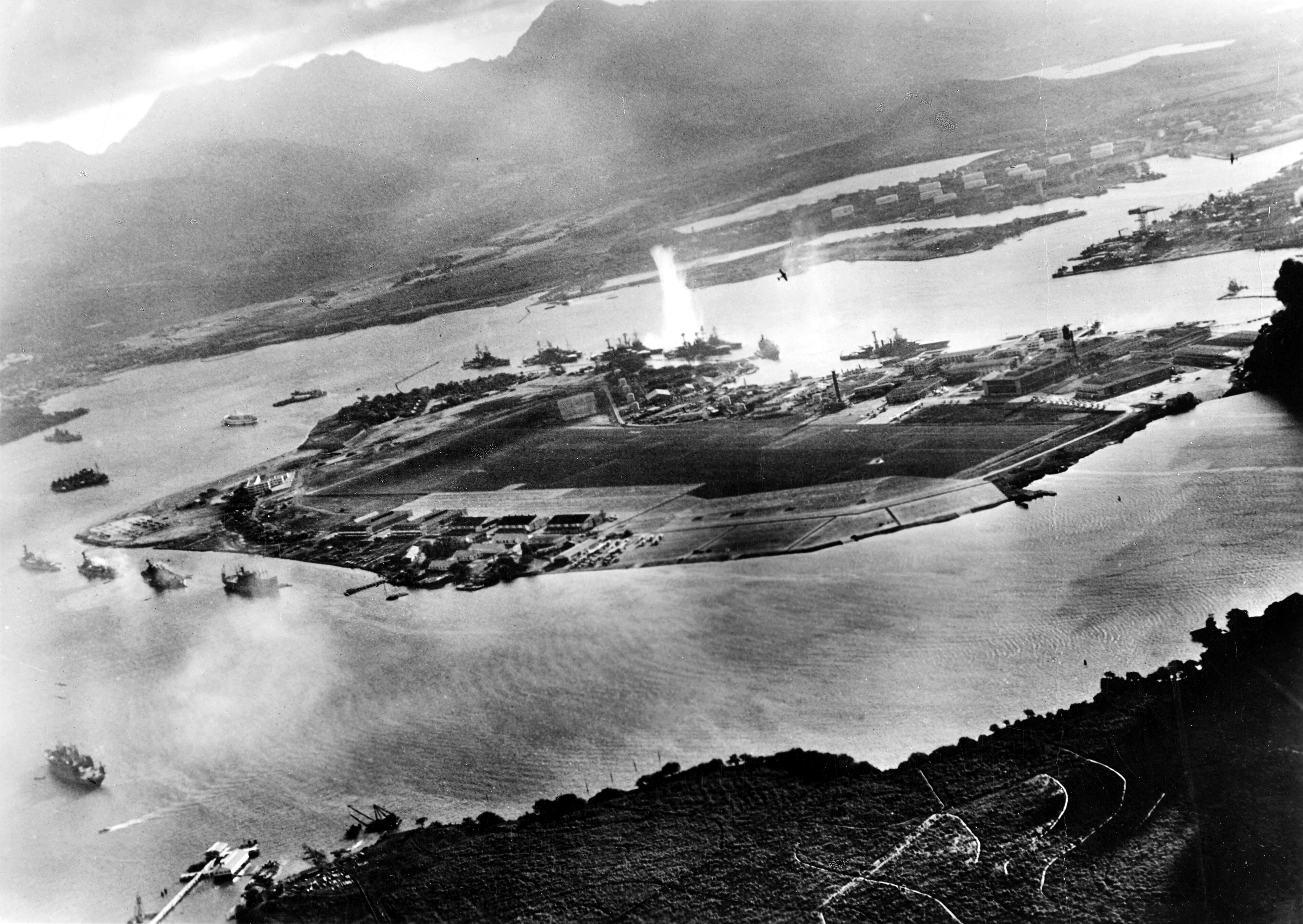
On the morning of 7 December 1941, 353 Japanese carrier aircraft struck the US Pacific Fleet at anchor in two waves, killing 2,403 Americans and sinking or damaging eight battleships — though the American aircraft carriers were at sea and escaped. The United States declared war the next day, and Hitler declared war on America four days later, turning two regional wars into a single global one.
Books Covering This Event (10)
Popular History

Pearl Harbor reconstructed hour by hour through the eyes of hundreds of people who were there.

The most comprehensive account of Pearl Harbor ever written — planning, attack, and aftermath from both sides.

The classic single-volume history of the American war against Japan.

A single-volume history of the entire war by the most influential military historian of the 20th century.

Franklin and Eleanor Roosevelt and the American home front, from the fall of France to victory.

From Pearl Harbor through Midway — the first volume of Toll's Pacific War Trilogy.

The 120 million paperback Armed Services Editions shipped to GIs — the books that fought the Nazi book burnings.
Historical Fiction

Life in an Army infantry company in Hawaii in the months before Pearl Harbor.

An American naval officer and his family are swept up in the opening years of the war, from Hitler's invasion of Poland to Pearl Harbor.

The War in Books: Pearl Harbor
Two hours on a Sunday morning, and the long argument over how it could happen.
The questions about Pearl Harbor started almost before the smoke cleared. How did the fleet come to be so exposed? Who knew what, and when? Gordon Prange’s At Dawn We Slept is the great answer, a huge account of the planning and the attack from both sides, the result of decades of research. It is long, but it is the book that a reader who wants to get past the conspiracy theories should go to. Ian Toll’s Pacific Crucible opens with the attack and takes the story through to Midway, giving the event the larger meaning it had: the beginning of a naval war of a kind no one had fought before.
For the setting, two novels do what the histories cannot. James Jones, who served in Hawaii and was there when the attack came, wrote From Here to Eternity about army life in the months before, so the reader lives in the old peacetime world that the bombs ended. Herman Wouk’s The Winds of War builds toward the same moment on an international canvas. Doris Kearns Goodwin’s No Ordinary Time, on the Roosevelts, shows what the attack meant in Washington and on the home front. John Keegan’s The Second World War completes the picture of how a regional crisis became a global war.