 40.2°N 26.3°E Gallipoli
Gallipoli Campaign
Briefing
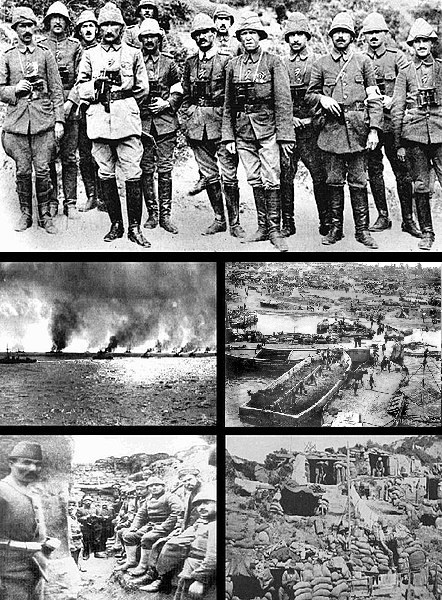
From April 1915 the Allies tried to force the Dardanelles and knock the Ottoman Empire out of the war, landing British, French, Australian, and New Zealand troops on the Gallipoli peninsula. Eight months of stalemate on the cliffs ended in evacuation — a costly failure that forged the Anzac legend and nearly ended Winston Churchill's career.
Books Covering This Event (4)

Popular History

A global history of the war that ranges far beyond the Western Front to Africa, the Middle East, and the seas.

A clear-eyed history of the doomed Dardanelles campaign, built from the testimony of the men who fought it.

An intimate history of the war told through the diaries and letters of twenty ordinary people on every front.
The War in Books: Gallipoli
A strategic gamble, a military failure, and the founding story of two nations.
Gallipoli has two lives on the page. In one it is a question of strategy: could a landing on the Dardanelles have knocked the Ottoman Empire out of the war and opened a route to Russia, or was the plan flawed from the start? In the other it is a story of national memory, above all in Australia and New Zealand, where Anzac Day still marks the anniversary of the landings, and in Turkey, where the defence of the peninsula is remembered as well. Any good book on the campaign has to keep both in view.
Peter Hart’s Gallipoli is the unsentimental account. Built around the testimony of the men who were there, it is sceptical of the idea that victory was ever close, and it leaves little of the romance standing. Hew Strachan’s The First World War places the campaign in the global conflict, well beyond the Western Front. For the human scale of a war that reached this far, Peter Englund’s The Beauty and the Sorrow follows ordinary people through diaries and letters. Start with Hart, and keep his scepticism in mind when reading anything more heroic.