 9.4°S 160.0°E Pacific
Guadalcanal Campaign
Briefing
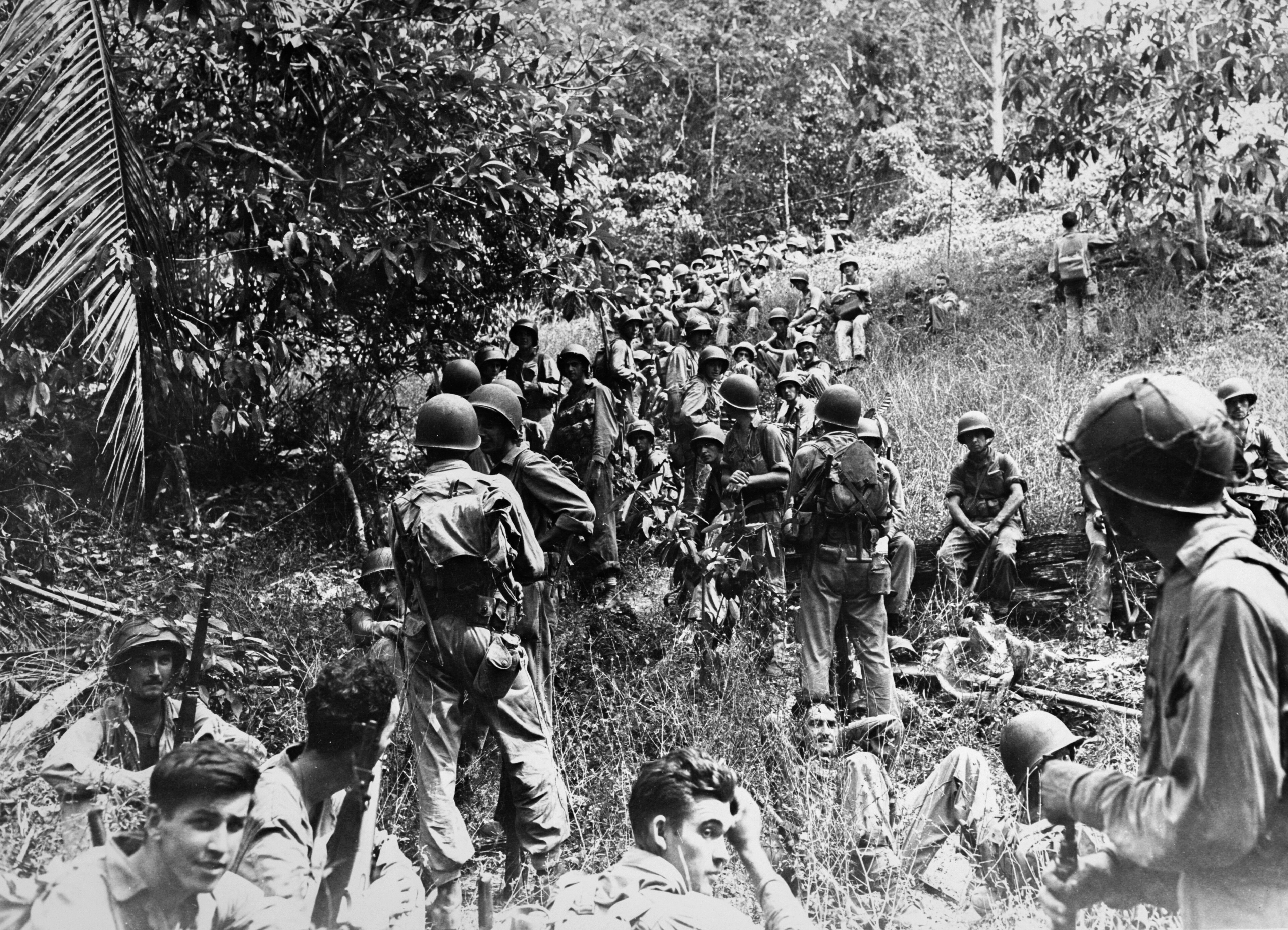
The first major Allied ground offensive of the Pacific War began in August 1942 and ran for six months of attritional jungle fighting, starvation, and seven major naval battles in waters that earned the name Ironbottom Sound. By February 1943 Japan had been forced onto the defensive for good — at the cost of more American sailors dead at sea than Marines on the island.
Books Covering This Event (12)
Memoir

A war correspondent's eyewitness account of the first months of the Guadalcanal campaign, published while the war was still being fought.

A Marine's memoir of Guadalcanal, New Britain, and Peleliu — from enlistment through combat to homecoming.

William Manchester's memoir of his time as a Marine in the Pacific, interwoven with a pilgrimage to the battlefields decades later.
Popular History

The United States Marines against Japan, island by island, by a man who fought as one.

The official companion to the HBO series, following five men through the island campaigns.

The savage naval battles around Guadalcanal — among the most costly naval campaigns in American history.

A sightseeing flight crashes in an uncharted New Guinea valley; three survivors meet a stone-age people, and gliders come to get them out.

The second volume of Toll's Pacific War Trilogy, covering the brutal middle years from Guadalcanal to the Marianas.

Historical Fiction

Linked stories of sailors, nurses, and islanders waiting out the war between battles in the islands.

A platoon of American soldiers fights to take a Japanese-held island in the Pacific.

A novel following an Army rifle company during the Guadalcanal campaign — the second volume of Jones's war trilogy.
This Event on Screen
Screen adaptations of books on this page, each linked to the book it came from: The Thin Red Line (1998).
The War in Books: Guadalcanal
Six months of jungle and night battles, in memoirs from the mud and histories of the sea.
The fight for Guadalcanal was the first in which American forces took the offensive against Japan on land, and much of the best writing on it comes from those who were there. Robert Leckie’s Helmet for My Pillow is an enlisted Marine’s memoir, wry and unsentimental. James Jones, who served there with the Army, turned the campaign into The Thin Red Line, a novel of a rifle company that treats combat as a process that empties men out. William Manchester’s Goodbye, Darkness comes from a Marine who fought later, on Okinawa, and who reckoned with the whole Pacific war decades afterwards as he returned to the islands.
The other half of the campaign took place at sea, and it is easy to forget that the navy lost more men than the Marines did ashore. James Hornfischer’s Neptune’s Inferno is the book on those night battles off the island. Ian Toll’s The Conquering Tide fits Guadalcanal into the long middle of the Pacific War. Laura Hillenbrand’s Unbroken, the story of Louis Zamperini, follows a different thread of the theatre, in the air and in captivity. Read Leckie and Hornfischer together to see both sides of the same campaign, one fought in the mud and the other in the dark.