 51.8°N 5.5°E Western Europe
Operation Market Garden
Briefing
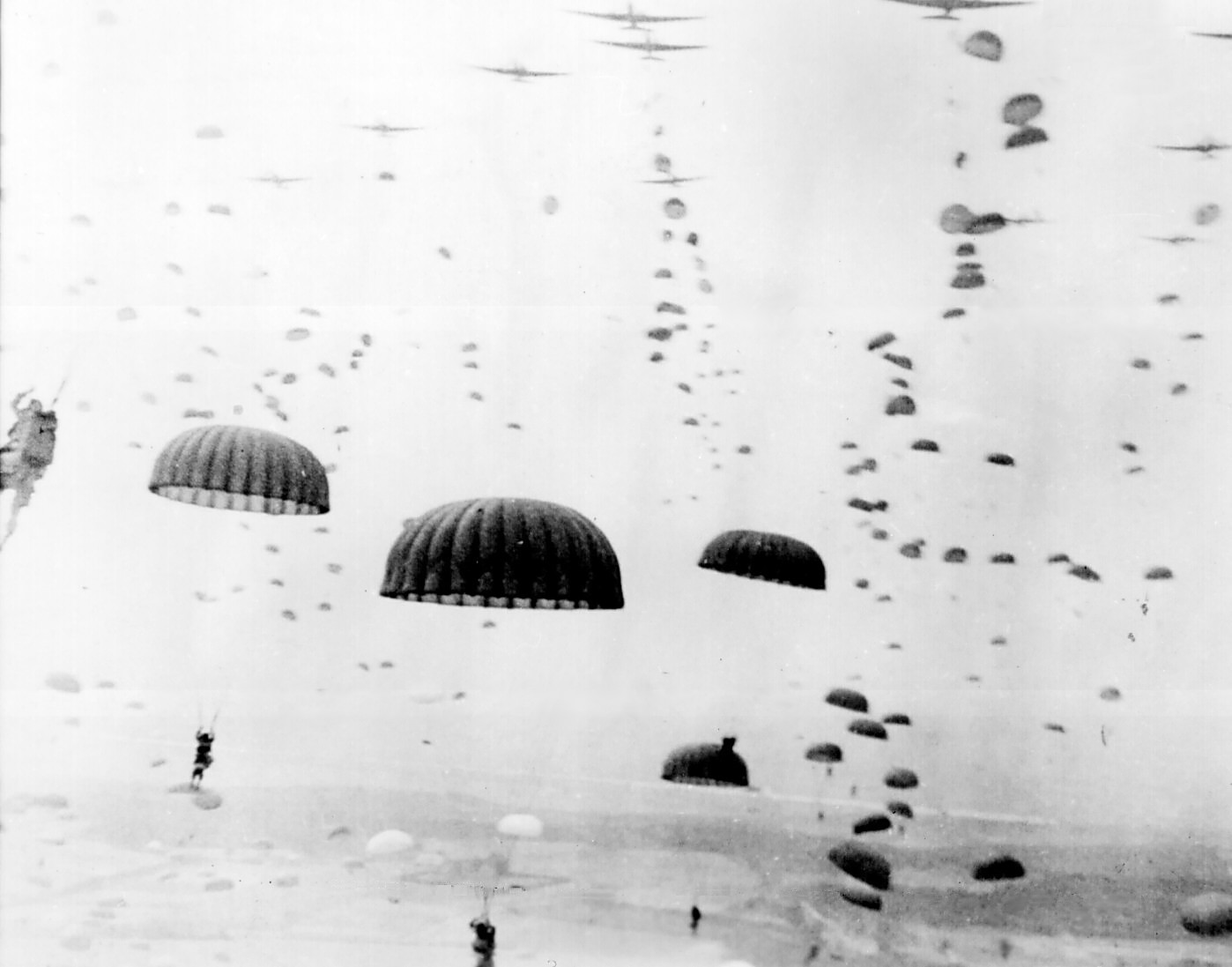
In September 1944, 35,000 Allied airborne troops dropped into the Netherlands to seize a corridor of bridges toward the Rhine and end the war by Christmas. The plan failed at the final bridge at Arnhem — a bridge too far — where the British 1st Airborne Division was effectively destroyed, losing nearly 8,000 of its 10,000 men.
Books Covering This Event (6)
Popular History

The story of Operation Market Garden — the bold airborne assault to seize a corridor of bridges through the Netherlands, which failed at Arnhem.

A single-volume history of the entire war by the most influential military historian of the 20th century.

The story of Easy Company, 506th PIR, from D-Day to Hitler's Eagle's Nest.

The final battle for Germany on both fronts, from September 1944 to the surrender.

The final volume of the Liberation Trilogy: from D-Day to the fall of the Third Reich.

This Event on Screen
Screen adaptations of books on this page, each linked to the book it came from: A Bridge Too Far (1977), Band of Brothers (2001).
The War in Books: Market Garden
A bold plan, a bridge out of reach, and the book that gave the battle its famous phrase.
Few battles are so closely tied to a single book. Cornelius Ryan’s A Bridge Too Far, published in 1974, gave Operation Market Garden the phrase by which it is still known. It uses the method he had perfected in The Longest Day: enormous numbers of interviews with participants on all sides, woven into a narrative of small human moments. The result is especially strong on the Dutch civilians, who welcomed the Allies with joy and were left to pay for the operation’s failure, and on the airborne men holding out at Arnhem for far longer than the plan intended.
Rick Atkinson’s The Guns at Last Light places the operation where it belongs, in the wider story of the Allied advance through 1944 and 1945. His account helps explain why the gamble seemed worth taking in the first place, with German resistance apparently crumbling and the Allied armies stretching their supply lines. The argument over whom to blame for the failure, in intelligence, planning or execution, has never been settled, and these two books give readers what they need to weigh it. Read Ryan for the drama, and then Atkinson to see how much of the war still lay ahead.